

5 Stars
From 220+ Google Reviews
Trustindex verifies that the original source of the review is Google. Extremely professional service. I was kept informed at every step and the procedure was swift and painless. Many thanks.Trustindex verifies that the original source of the review is Google. Dr. Kahan is an exceptional professional with a great sense of humor. He combines expertise with a warm and approachable manner, making every visit a positive experience. His professionalism and knowledge are outstanding, and he genuinely cares about his patients. Highly recommended!Trustindex verifies that the original source of the review is Google. Clear, comprehensive, balanced explanation that put my son at his ease despite a difficult clinical situationTrustindex verifies that the original source of the review is Google. I found Richard Kahan very easy going, consultative and very focused on my needs also he was very structured on detailed explanations. Thoroughly knowledgeable and helpful.Trustindex verifies that the original source of the review is Google. Kind, friendly and skilled staff, would highly recommend.Trustindex verifies that the original source of the review is Google. I was booked in very promptly (same day, in fact immediately) after I contacted the practice explaining that I was in severe pain. I was brought back the next day in the dentist's and nurse's lunch hour to relieve my situation. Very impressive and very much appreciated. I also received follow up communication after the appointment to enquire how I was. Overall all staff at the practice were very caring.Trustindex verifies that the original source of the review is Google. Amazing Service, Amazing Staff, Very HelpfulTrustindex verifies that the original source of the review is Google. Amazing!
Pulpitis is inflammation of the dental pulp- the nerve and blood supply inside your tooth- and it’s one of the most common causes of persistent, hard-to-ignore tooth pain. It can start as mild sensitivity to hot or cold, or escalate quickly into sharp, throbbing pain that disrupts sleep and daily life.
At The Harley Street Academy of Endodontics, we focus on treating the cause of pulpitis, not just masking the symptoms. Using specialist diagnostics, CBCT 3D imaging, and microscope-led care, we determine whether the pulp can be calmed and preserved- or whether definitive treatment such as root canal therapy is needed to stop pain and protect your tooth long-term.
Early assessment matters. When pulpitis is treated promptly, outcomes are more predictable, discomfort is reduced, and natural teeth are often saved.
Specialist endodontists • CBCT-guided care • Fixed transparent fees
What is Pulpitis?
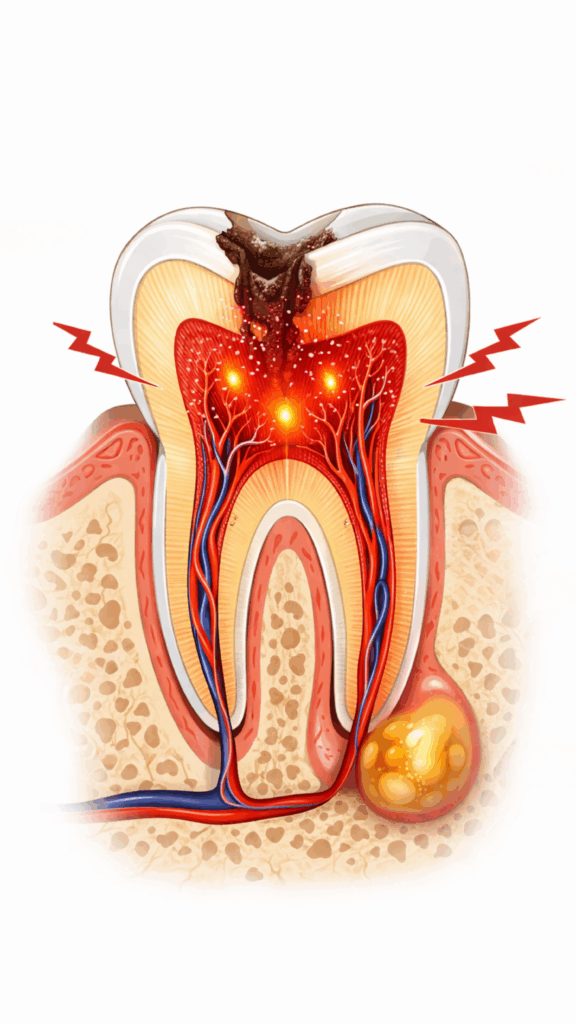
Pulpitis is inflammation of the dental pulp- the soft, living tissue inside the tooth that contains nerves and blood vessels. This tissue is highly sensitive, and when it becomes irritated or infected, it can trigger pain that ranges from mild and fleeting to intense and constant.
The pulp is protected by enamel and dentine, but once these outer layers are compromised, bacteria, heat, pressure, or trauma can inflame the nerve. In the early stages, this inflammation may be reversible. If the irritation continues or bacteria reach the pulp, the damage can become permanent.
Pulpitis is one of the most common reasons people seek urgent dental care. It’s also one of the most misunderstood. Pain may come and go, change in intensity, or disappear altogether- even while the underlying problem worsens. That’s why accurate diagnosis is essential.
At Endo Academy, we use specialist testing, high-resolution imaging, and microscope-led assessment to determine the exact stage of pulp inflammation. This allows us to recommend the most conservative and predictable treatment- whether that’s calming the pulp, monitoring it closely, or removing infected tissue before it spreads further.
Diagnosis of pulpitis in its early stages can be the difference between preserving the nerve and needing root canal treatment later.
Types of Pulpitis:
Not all pulp inflammation behaves the same way. Identifying the type of pulpitis is critical because it determines whether the nerve can be preserved or whether definitive treatment is needed to prevent infection and ongoing pain.
1
Reversible Pulpitis
This is the early, milder form of pulp inflammation. The pulp is irritated but still healthy enough to recover once the cause is removed.
Common features include:
- Brief sensitivity to cold, sweet foods, or air
- Discomfort that settles quickly once the stimulus is removed
- No spontaneous or night-time pain
With timely treatment- such as removing decay, replacing a faulty filling, or sealing a crack- the pulp can often settle and remain vital.
2
Irreversible Pulpitis
Here, the pulp is permanently damaged and unable to heal. Inflammation progresses, pressure builds inside the tooth, and pain often becomes intense and unpredictable.
Typical signs include:
- Lingering pain after hot or cold
- Throbbing or spontaneous pain, often worse at night
- Pain that radiates to the jaw, ear, or head
- Sensitivity that no longer resolves
In these cases, root canal treatment is required to remove the inflamed or infected pulp and stop the pain at its source.
3
Acute vs chronic pulpitis
- Acute pulpitis presents with sharp, severe pain and heightened sensitivity.
- Chronic pulpitis may cause dull, intermittent discomfort, or surprisingly little pain at all, even though the pulp is irreversibly damaged. Chronic cases are often left untreated for too long because symptoms can temporarily fade, leading the patient to believe the problem has resolved, while the infection quietly progresses.
Symptoms of Pulpitis
Pulpitis can be obvious… or deceptively subtle. Some people experience intense pain early on, while others notice only mild sensitivity until the inflammation becomes severe. Because symptoms don’t always follow a neat pattern, it’s important not to ignore changes, even if they seem manageable at first.
Common symptoms include:
- Sensitivity to hot, cold, or sweet foods that lingers after the stimulus is removed
- Sharp, electric pain triggered by temperature changes
- Throbbing or aching pain that comes on spontaneously
- Night-time pain that wakes you or worsens when lying down
- Pain when biting, chewing, or tapping the tooth
- Discomfort that radiates to the jaw, ear, or temple
- A tooth that suddenly feels different or “aware” when you bite
What Causes Pulpitis?
Pulpitis develops when the dental pulp becomes irritated or inflamed. This usually happens when the protective outer layers of the tooth are breached, allowing bacteria, heat, or mechanical stress to affect the nerve tissue inside.
Once the pulp is irritated, inflammation causes increased pressure within the tooth. Because the pulp is enclosed in hard walls of dentine, this pressure has nowhere to escape- which is why pulpitis pain can feel intense, deep, and relentless.
The most common causes include:
- Deep tooth decay that allows bacteria to reach the pulp
- Cracks or fractures in the tooth, even if they’re not visible
- Leaking or worn fillings that no longer seal the tooth properly
- Repeated dental work on the same tooth can stress the pulp over time
- Trauma or impact, even without obvious breakage
- Heavy biting forces, clenching, or grinding (bruxism)
- Advanced tooth wear from erosion or abrasion
In some cases, pulpitis develops silently. A tooth may have no obvious cavity or visible damage, yet the pulp is already inflamed due to microcracks or previous treatment. This is why symptoms don’t always match what can be seen on the surface.
If the underlying cause isn’t addressed, pulpitis rarely improves on its own and often progresses to infection. Early, accurate diagnosis gives you the best chance of preserving your natural tooth.
Do I Need To See a Specialist for Pulpitis?
Yes- especially if the pain is lingering, worsening, or unpredictable. Pulpitis isn’t something that reliably settles on its own, and delaying assessment often reduces your treatment options.
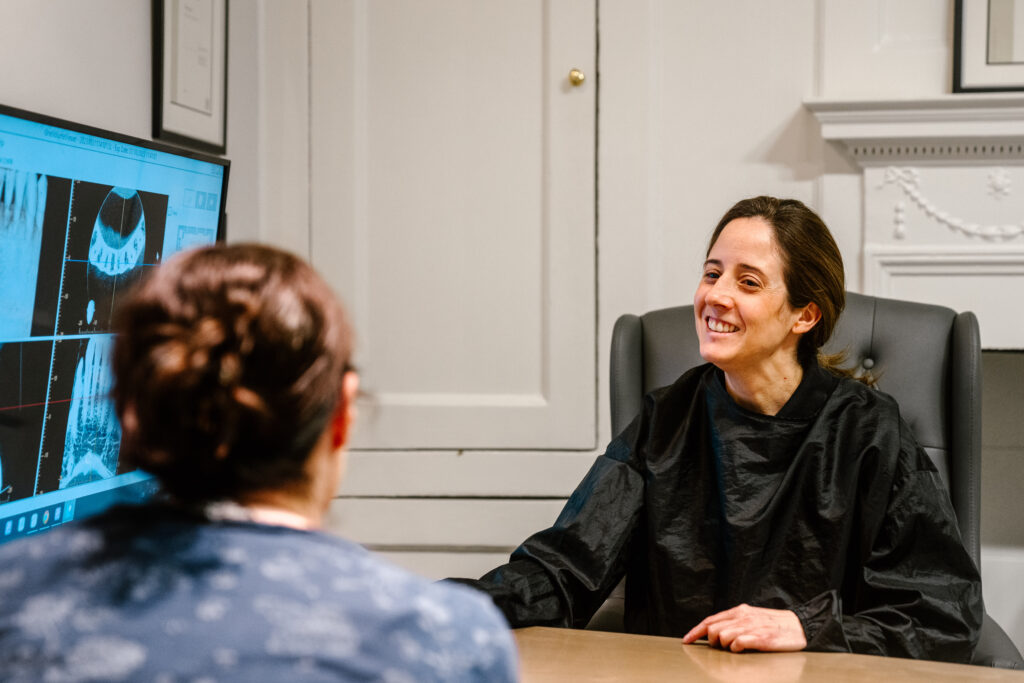
General dental checks are excellent for spotting decay and routine problems, but pulp inflammation can be complex. Symptoms don’t always match what’s happening inside the tooth, and standard X-rays may miss early nerve damage, microcracks, or deep inflammation. That’s where specialist endodontic assessment makes a difference.
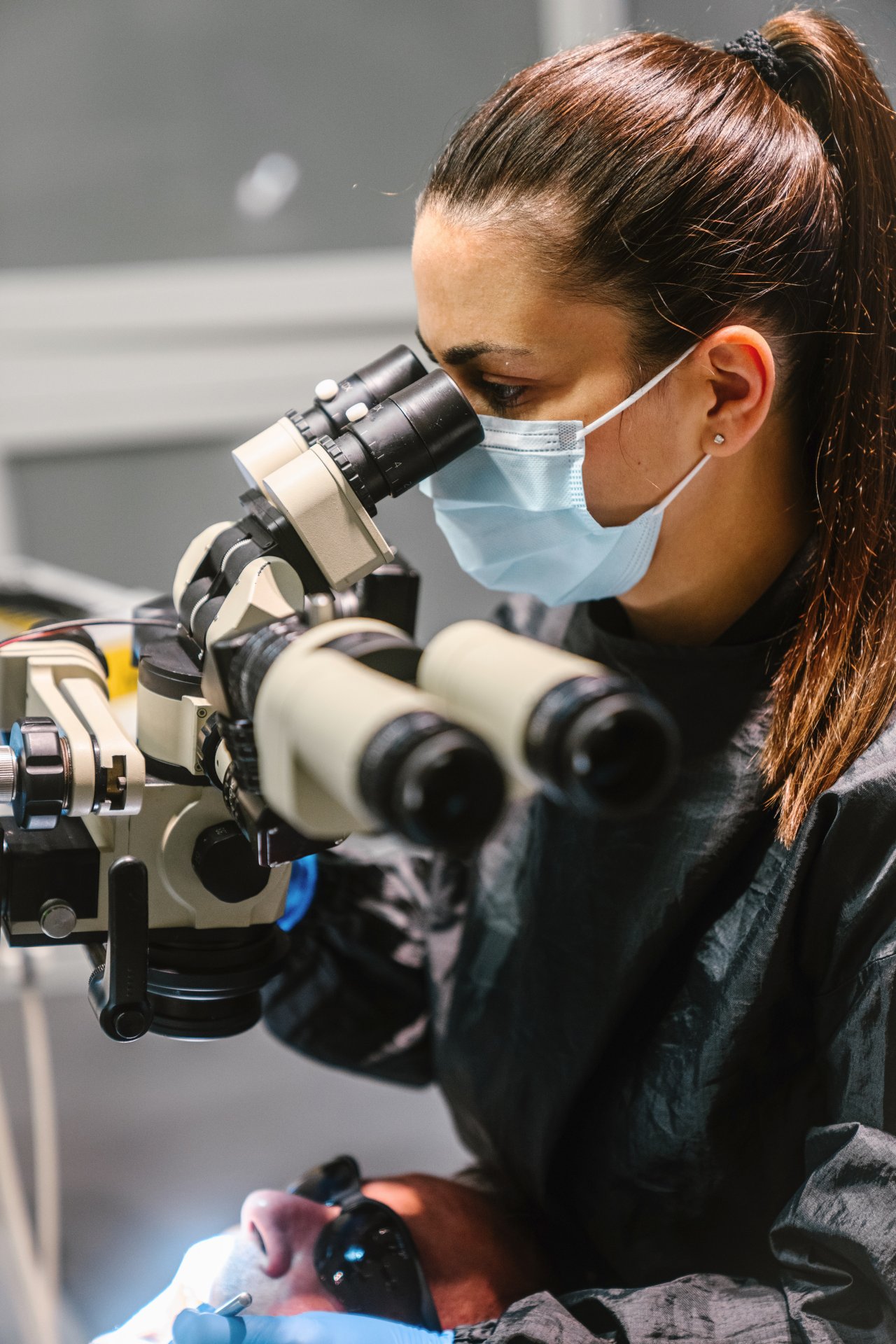
At Endo Academy, we focus exclusively on diagnosing and treating problems of the dental pulp and root canal system. Using CBCT 3D imaging, vitality testing, and microscope-led examination, we can determine:
- Whether pulpitis is reversible or irreversible
- If the nerve can be preserved or needs treatment
- Whether symptoms are coming from the tooth you suspect, or a different one
- If cracks, hidden decay, or previous dental work are contributing
Importantly, seeing a specialist doesn’t automatically mean root canal treatment. Many cases of early pulpitis can be managed conservatively when diagnosed accurately. The goal is always the least invasive, most predictable solution- with clear explanation at every step.
Ignoring pulpitis, however, can lead to:
- Escalating pain and nighttime symptoms
- Pulp death and dental abscess formation
- Spread of infection into the bone or surrounding tissues
- More complex and time-consuming treatment later
If your tooth is telling you something isn’t right, it’s worth listening to early.
How we Treat Pulpitis at The Endo Academy
Specialist Diagnostics
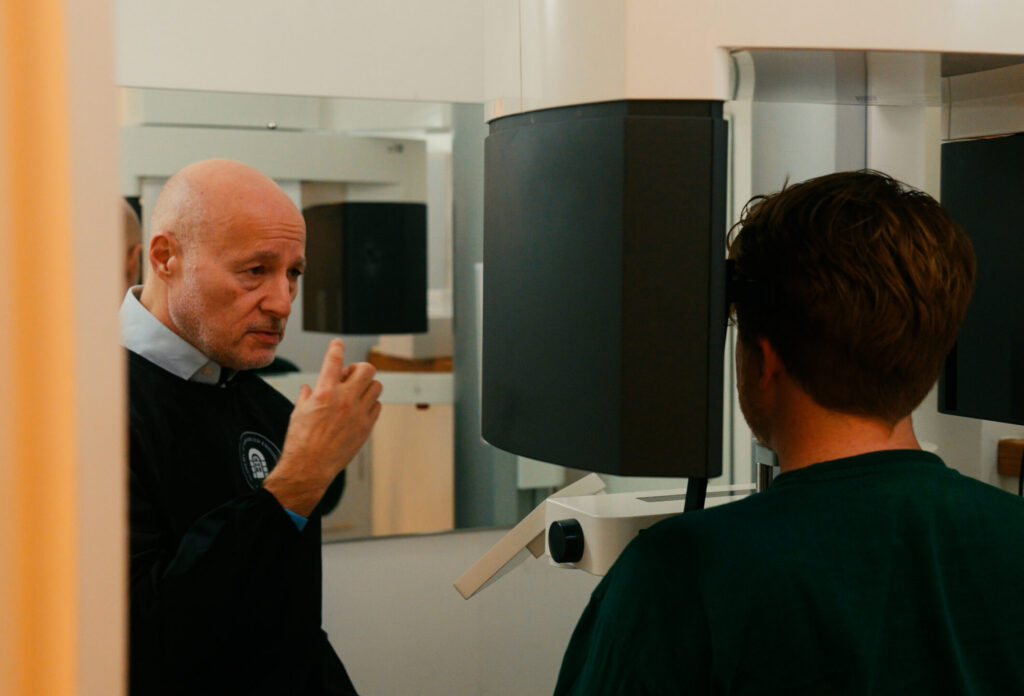
Every case starts with a detailed assessment. We combine clinical testing, vitality checks, and high-resolution 3D CBCT imaging, as indicated, to understand exactly what’s happening inside the tooth. This allows us to distinguish between reversible and irreversible pulpitis and to rule out contributing factors such as cracks, hidden decay, or early infection.
Accurate diagnosis is the difference between calming the pulp and needing more definitive treatment later.
Conservative treatment for reversible pulpitis

If the pulp is inflamed but still capable of healing, our aim is to preserve it. Treatment may involve:
- Removing decay or defective restorations
- Sealing exposed dentine
- Stabilising cracks or bite forces
- Placing a protective filling or restoration
When the irritant is eliminated and the tooth is properly sealed, the pulp often settles and remains healthy. We monitor recovery closely and give clear guidance on what to expect.
Root canal treatment for irreversible pulpitis
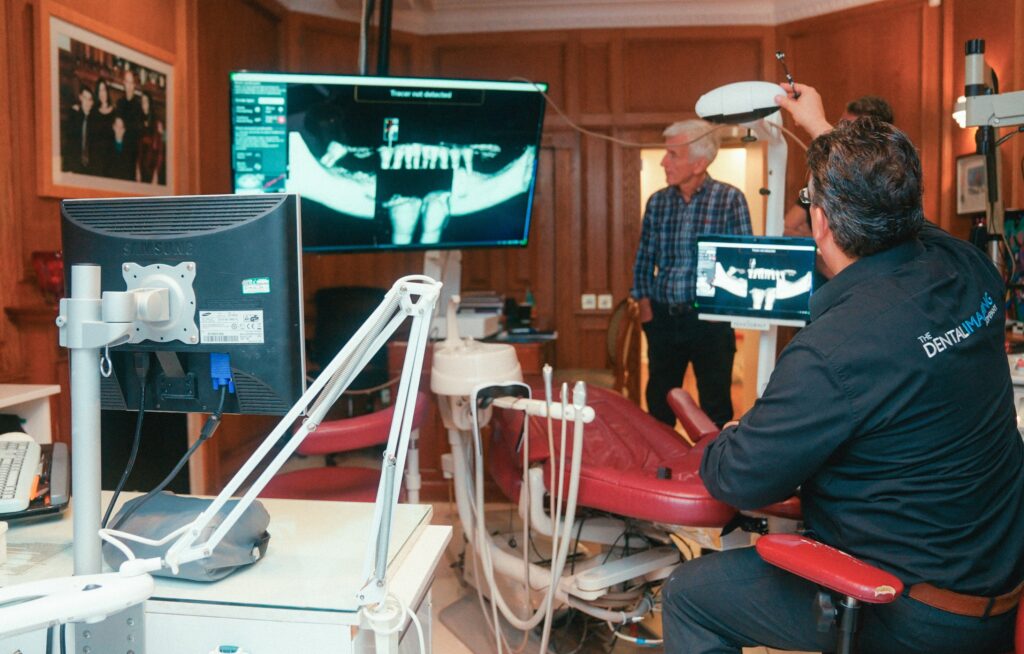
When the pulp is irreversibly inflamed, it cannot recover. In these cases, root canal treatment is the most predictable way to stop pain and prevent infection.
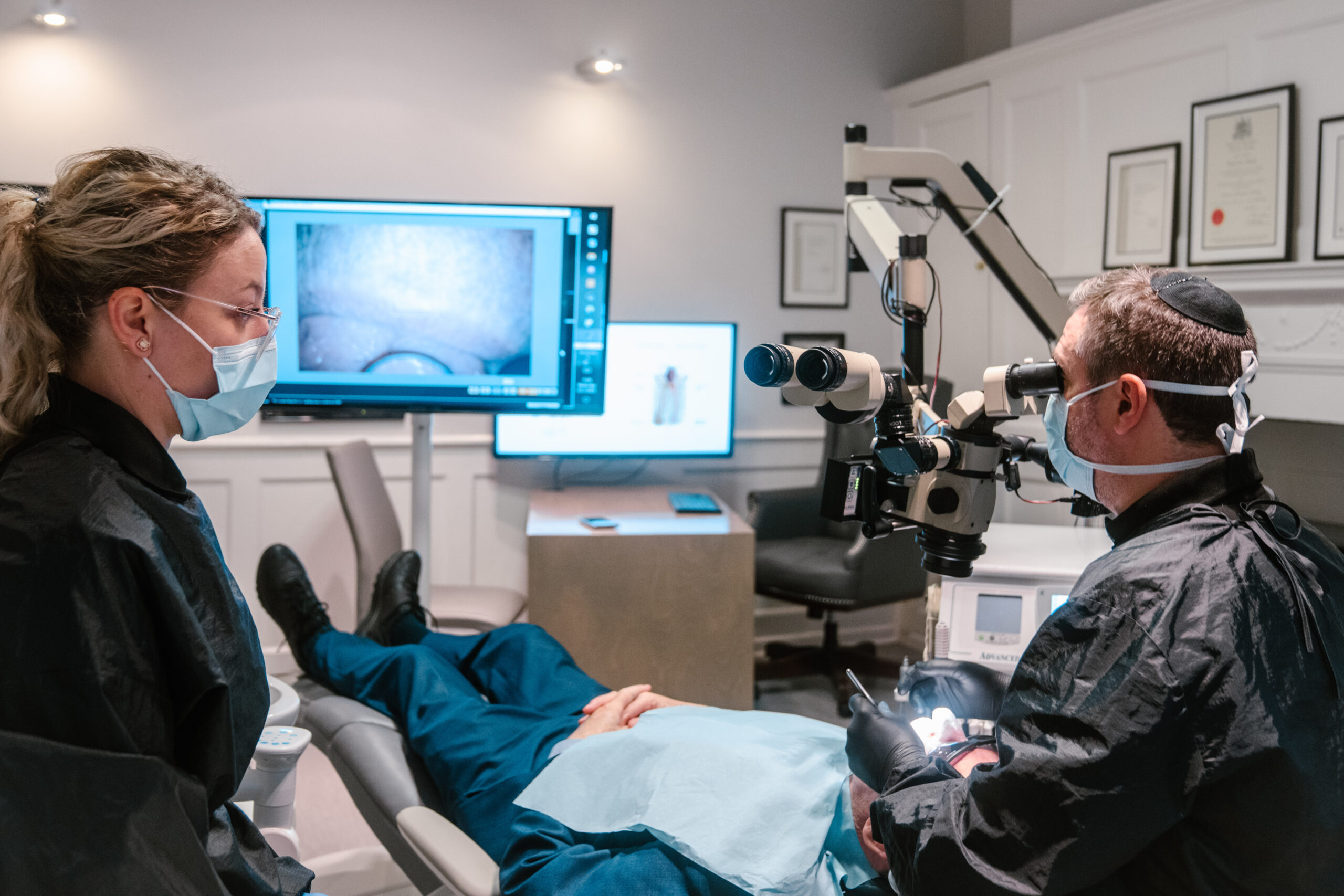
Under high magnification, we remove the inflamed or infected pulp, clean and shape the canals, disinfect thoroughly, and seal them to prevent bacteria returning. Most patients experience significant relief once the nerve pressure is removed.
Laser-assisted disinfection
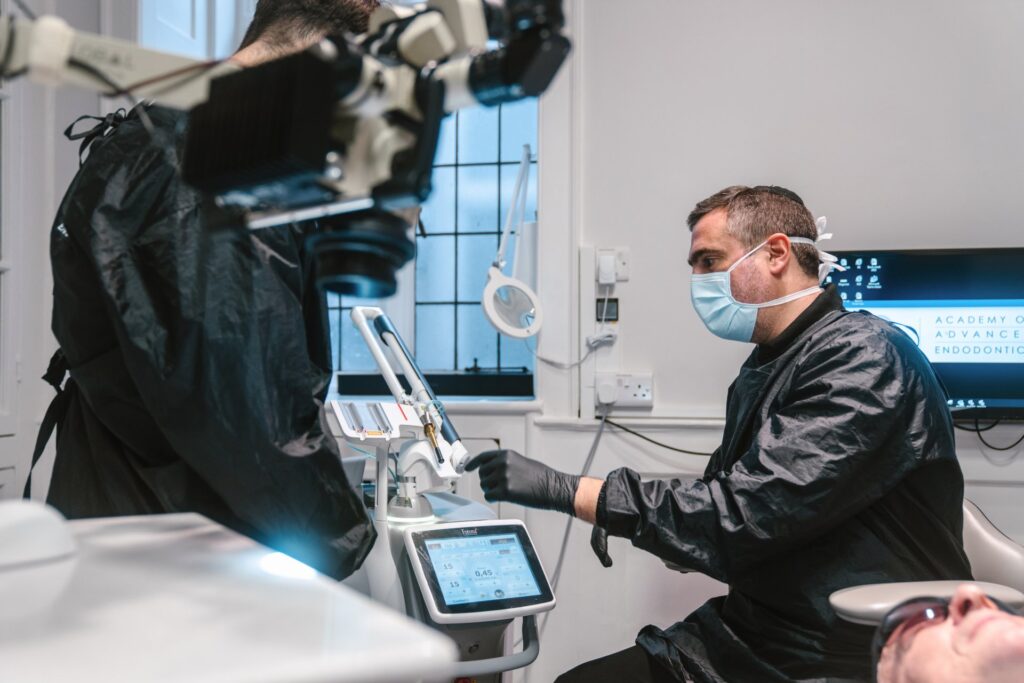
We use advanced laser technology as part of our disinfection protocols. This allows us to target bacteria in areas that traditional instruments and irrigation solutions can’t reliably reach, improving cleanliness and predictability.
Follow-up and long-term protection
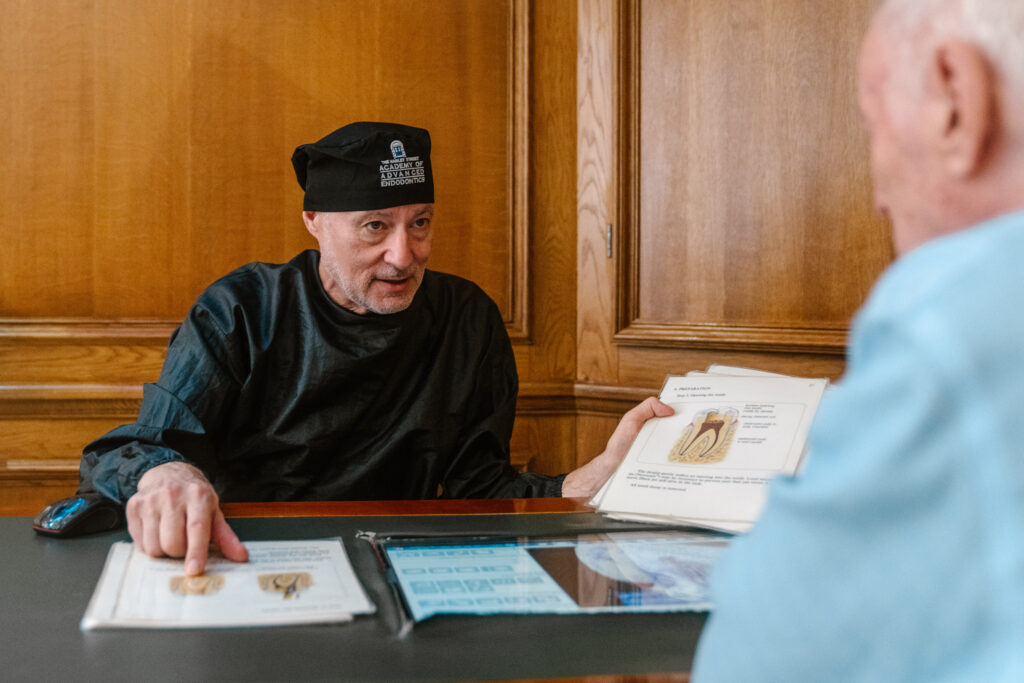
After treatment, you’ll receive clear aftercare instructions and a written report. We also coordinate with your general dentist regarding the final restoration- often a crown- to protect the tooth from future cracks or reinfection and ensure long-term success.
Our aim is not just to relieve pain, but to preserve your natural tooth comfortably and predictably for years to come.
Costs & Payment Options
At Endo The Academy, fees are fixed, transparent, and confirmed before treatment begins, so you know exactly what to expect.
Your treatment fee typically includes:
- Specialist assessment and diagnostic testing
- Targeted imaging, including CBCT 3D scans where indicated
- Microscope-led treatment with rubber dam isolation
- Advanced irrigation and laser-assisted disinfection
- Completion of treatment with a high-quality temporary or permanent core restoration
- A detailed written report for you and your dentist
What’s not included:
The final restoration (usually a crown or onlay) is completed by your general dentist once the tooth has settled. We coordinate closely with them to ensure the tooth is protected long term.
Retreatment & complex cases
If pulpitis is associated with a previously treated tooth, cracked restorations, calcified canals, or posts, treatment can be more time-intensive. Fees reflect the additional complexity, and we’ll explain this clearly at your consultation with imaging and a step-by-step plan.
NHS vs private care
Access to specialist endodontic care on the NHS is limited, particularly for molars and complex cases. Private treatment allows:
- Faster access to care
- Advanced diagnostics and modern disinfection protocols
- Predictable appointment times
- Continuity with a specialist endodontist
If you’d like to discuss staged care, treatment timing, or financial options, our team is happy to guide you in plain English.


Why Choose Endo Academy on Harley Street
- Specialist endodontists with academic and teaching backgrounds
- Microscope-led care for every case, routine or complex
- CBCT 3D imaging when indicated for precise diagnosis and planning
- Laser-assisted disinfection to target bacteria beyond instruments
- Fixed, transparent fees and written treatment reports
- Calm, patient-first experience: we pace, explain, and check comfort
- Harley Street location with reliable appointment availability
Our location
99 Harley Street
Strategically located at the heart of London’s renowned medical district, the Academy of Advanced Endodontics enjoys its position on prestigious Harley Street, ensuring easy accessibility and a prime setting for patients and practitioners alike.
Take the first step towards pain-free, expert root canal care. Let us help you save your natural teeth and restore your oral health.
FAQs
Answering our most commonly asked questions.
Is pulpitis a dental emergency?
Pulpitis can become urgent, particularly if pain is severe, persistent, or waking you at night. While early pulpitis isn’t always an emergency, worsening symptoms suggest the pulp is under significant pressure and may be irreversibly damaged. Prompt assessment reduces the risk of infection and more complex treatment.
Can pulpitis heal on its own?
Reversible pulpitis can sometimes settle if the source of irritation is removed early. However, irreversible pulpitis will not heal on its own. Pain may temporarily ease as the nerve begins to die, but this often leads to infection. The only predictable solution is professional treatment.
What’s the difference between reversible and irreversible pulpitis?
Reversible pulpitis involves mild inflammation where the nerve can recover once the cause is treated. Irreversible pulpitis means the nerve is permanently damaged and cannot heal, even if symptoms fluctuate. Correct diagnosis is essential, as treatment approaches differ significantly.
Does pulpitis always require root canal treatment?
No. Early, reversible pulpitis may be managed conservatively by removing decay, replacing faulty restorations, or sealing the tooth. Root canal treatment is only required when the pulp is irreversibly inflamed or infected.
Is treatment for pulpitis painful?
Treatment itself is comfortable. We use effective local anaesthesia and check numbness thoroughly before starting. In fact, many patients feel immediate relief once the inflamed nerve is treated. Mild tenderness afterwards is normal and usually settles within a few days.
Can pulpitis come back after treatment?
If the tooth isn’t fully sealed or the underlying cause isn’t addressed, symptoms can return. That’s why we focus on accurate diagnosis, thorough disinfection, and proper long-term restoration to reduce the risk of recurrence.
Can antibiotics treat pulpitis?
Antibiotics do not treat pulpitis itself. They may be prescribed if there are signs of spreading infection, but they don’t remove inflamed or infected pulp tissue. Definitive treatment involves addressing the problem inside the tooth.
What happens if pulpitis is left untreated?
Untreated pulpitis often progresses to pulp death, infection, and abscess formation. This can lead to swelling, bone loss, and more complex treatment. Early intervention is simpler, more predictable, and often less invasive.
How long does recovery take?
For conservative treatment, sensitivity often improves within days to a couple of weeks. After root canal treatment, mild bite tenderness can last 24–72 hours. Full healing of surrounding tissues may take a few weeks, especially if inflammation was advanced.
Get specialist treatment for pulpitis in London
If you’re dealing with persistent tooth sensitivity or pain, you don’t have to wait until it becomes unbearable. With specialist diagnosis and targeted treatment, pulpitis can be managed effectively — often while preserving your natural tooth.
Still have a question?
Subscribe to our newsletter
Stay up to date with our latest news and events.
By clicking Sign Up you’re confirming that you agree with our Terms and Conditions.