
Root Canal Treatment in London
Advanced endodontic care on Harley Street.

5 Stars
From 220+ Google Reviews
Trustindex verifies that the original source of the review is Google. Extremely professional service. I was kept informed at every step and the procedure was swift and painless. Many thanks.Trustindex verifies that the original source of the review is Google. Dr. Kahan is an exceptional professional with a great sense of humor. He combines expertise with a warm and approachable manner, making every visit a positive experience. His professionalism and knowledge are outstanding, and he genuinely cares about his patients. Highly recommended!Trustindex verifies that the original source of the review is Google. Clear, comprehensive, balanced explanation that put my son at his ease despite a difficult clinical situationTrustindex verifies that the original source of the review is Google. I found Richard Kahan very easy going, consultative and very focused on my needs also he was very structured on detailed explanations. Thoroughly knowledgeable and helpful.Trustindex verifies that the original source of the review is Google. Kind, friendly and skilled staff, would highly recommend.Trustindex verifies that the original source of the review is Google. I was booked in very promptly (same day, in fact immediately) after I contacted the practice explaining that I was in severe pain. I was brought back the next day in the dentist's and nurse's lunch hour to relieve my situation. Very impressive and very much appreciated. I also received follow up communication after the appointment to enquire how I was. Overall all staff at the practice were very caring.Trustindex verifies that the original source of the review is Google. Amazing Service, Amazing Staff, Very HelpfulTrustindex verifies that the original source of the review is Google. Amazing!

Specialist Endodontists

CBCT-Guided
Care

Fixed Transparent Fees
What is a Root Canal Treatment?
A root canal treatment is a procedure that cleans and seals the inside of a tooth when the pulp (the soft tissue with nerves and blood supply) becomes inflamed or infected. Decay, cracks, repeated dental work, or a knock to the tooth can all set it off.
The Process: After numbing the area, your endodontist creates a small opening in the tooth to reach the canals — the narrow pathways inside the roots. We remove the inflamed or infected tissue, clean and shape with fine instruments, disinfect thoroughly, and then fill and seal them to keep bacteria out. The tooth is then restored — often with a crown — so you can chew with confidence again.
Why save the tooth at all? Because your own tooth, when healthy and sealed, is a far better option than an implant when function, comfort, bone preservation are concerned. Most patients feel relief quickly, especially if pain was the reason they came in. And despite the myths, modern root canal treatment is designed to be comfortable.
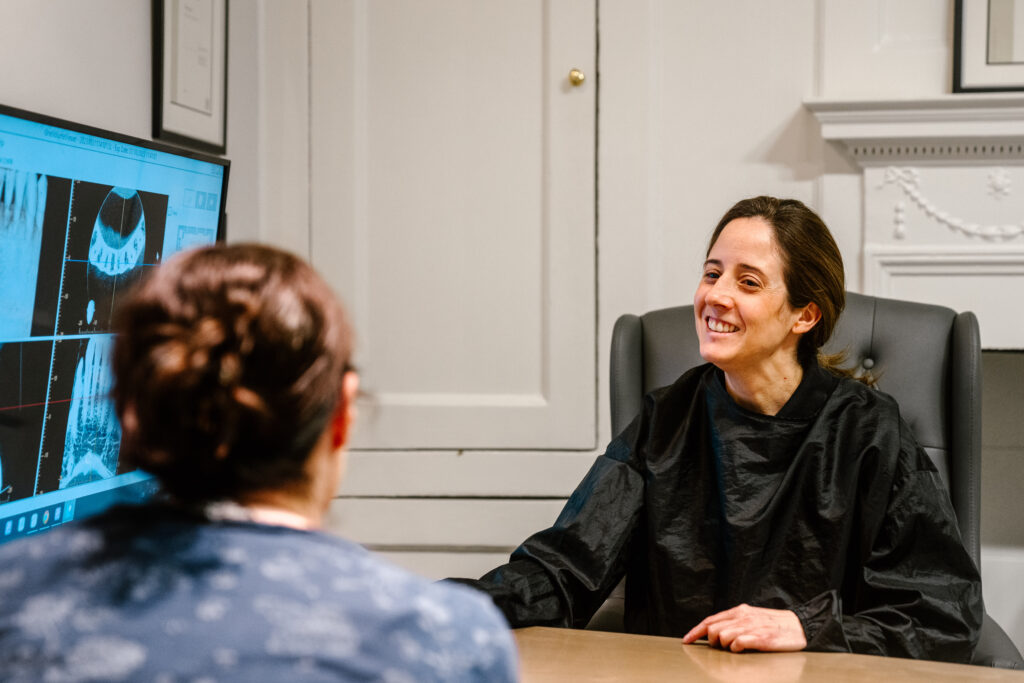
Do You Need a Root Canal Treatment?
Common Symptoms
If you recognise any of these, it’s time to get checked:
- Lingering pain after hot or cold food/beverages that lasts more than a minute
- Throbbing or night pain that wakes you up
- Tenderness on biting or when you tap the tooth
- Swelling of the gum or face near one tooth
- A pimple on the gum that drains now and then (an abscess)
- Deep decay or a cracked tooth after a knock
- Previous large fillings or repeat work on the same tooth
Worth noting: pain can “refer,” so you might feel it in the ear, jaw, or a different tooth. And sometimes an infected tooth is oddly quiet—no pain at all—until it isn’t. That’s why we rely on high-resolution imaging and specialist testing. If you’re in doubt, come in. A short appointment now can save a tooth for many years.
Does a Root Canal Treatment Hurt?
Short answer: no, not during treatment. We numb the tooth fully and check that you’re comfortable before we start. Most patients are surprised by how calm it feels; like a long, careful filling.
Afterwards, the tooth and surrounding ligament can feel tender, especially on biting, for 24–72 hours. That’s normal. Over-the-counter pain relief usually handles it. We’ll give you clear aftercare, and we’re here if you need advice.
Pain before treatment is a different story. An inflamed pulp can create sharp, electric shocks or a deep, throbbing ache. The good news: root canal treatment removes that cause. Many patients feel relief the same day. If you’re nervous, tell us. We pace the appointment, use modern anaesthesia techniques, and keep you informed throughout. If you’re particularly anxious pre-appointment sedatives can be prescribed.
How Long Does a Root Canal Treatment Take?
It depends on the tooth and complexity. As a guide:

Front teeth (single canal):
~60–90 minutes

Premolars (1–2 canals):
~90 minutes

Molars (3–4 canals):
~120–150 minutes
If the infection is severe or the anatomy is complex (with extra canals, curves, or old posts), we may split care over two visits to achieve the cleanest result. Retreatment of a failed root canal can also take longer. We’ll set expectations up front, so you can plan accordingly.
Our Approach at Endo Academy
Advanced Diagnostics:
We start with specialist tests and CBCT 3D imaging. These show the full root anatomy, hidden cracks, and lesions you can’t see on standard X-rays.
Microscope-led treatment.
Every case is done under high magnification. We can find extra canals, clean more precisely, and keep the tooth structure intact.
Advanced disinfection.
We use modern irrigation protocols and laser-assisted disinfection to target bacteria in places standard instruments can’t reach.
Sealing and restoration.
We obturate with various techniques for a dense fill, then coordinate your definitive restoration with your dentist—often a crown—to protect the tooth long-term.
Comfort and clarity:
We prioritise painless care, clear timelines, and fixed, transparent fees—the price quoted is the price you pay. Where applicable, we offer a 12-month guarantee for added peace of mind.
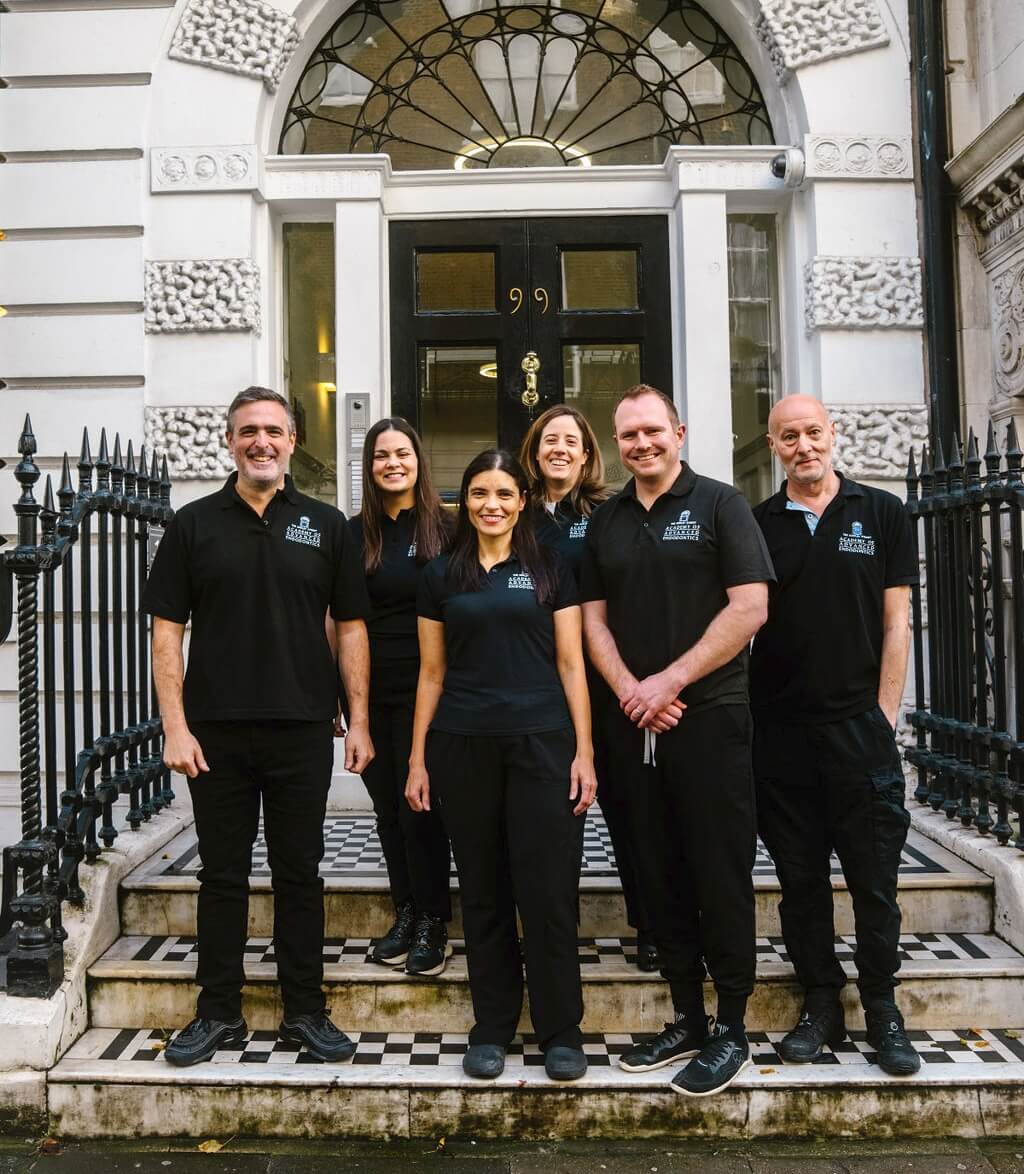
Step-by-Step:
the Root Canal Treatment Procedure
1
Assessment & Plan.
We examine the tooth, take targeted X-rays, and use CBCT 3D imaging when indicated. You’ll get a clear diagnosis and time estimate.
2
Comfort first.
Local anaesthetic. We test the tooth for full numbness before we begin.
3
Access.
A small opening in the biting surface or back of the tooth lets us reach the canals.
4
Cleaning & Shaping.
Under a surgical microscope, we locate all canals. We remove inflamed or infected pulp, then shape the canals with fine instruments for effective cleaning.
5
Disinfection.
We irrigate with activated solutions and use laser-assisted disinfection to target bacteria and biofilm where tools can’t reach.
6
Sealing (Obturation).
Once clean and dry, canals are filled with gutta-percha and sealer to create a dense, bacteria-tight seal.
7
Permanent Filling Core.
We place a permanent filling core and share aftercare instructions. If needed, a second visit is booked.
8
Definitive Restoration.
Your dentist completes the final restoration — often a crown — to reinforce the tooth and prevent future cracks. You leave with a written summary, images, and what to expect over the next few days.
Aftercare & Recovery Timeline
Once the anaesthetic fades, the tooth and surrounding ligament can feel tender for 24–72 hours. That’s normal. Here’s the usual timeline:
- Day 0–1: Mild ache or bite soreness. Take recommended pain relief as directed.
- Day 2–3: Sensation settles. Chew on the other side if it’s sore.
- Day 4+: Back to normal eating, unless we’ve advised otherwise.
Tips that help:
- Avoid very hard or sticky foods until the final crown is placed.
- Keep the area clean; gentle brushing is fine the same day.
- If you’ve been given a temporary, treat it gently.
Call us if you notice increasing swelling, severe pain that doesn’t respond to medication, fever, or if the temporary filling feels loose.
Antibiotics aren’t routine for root canal treatments; we use them only when there are clear signs of spreading infection or systemic involvement. Most recovery is handled by the treatment itself and sensible aftercare. You’ll have a direct line to us if you’re unsure about anything.
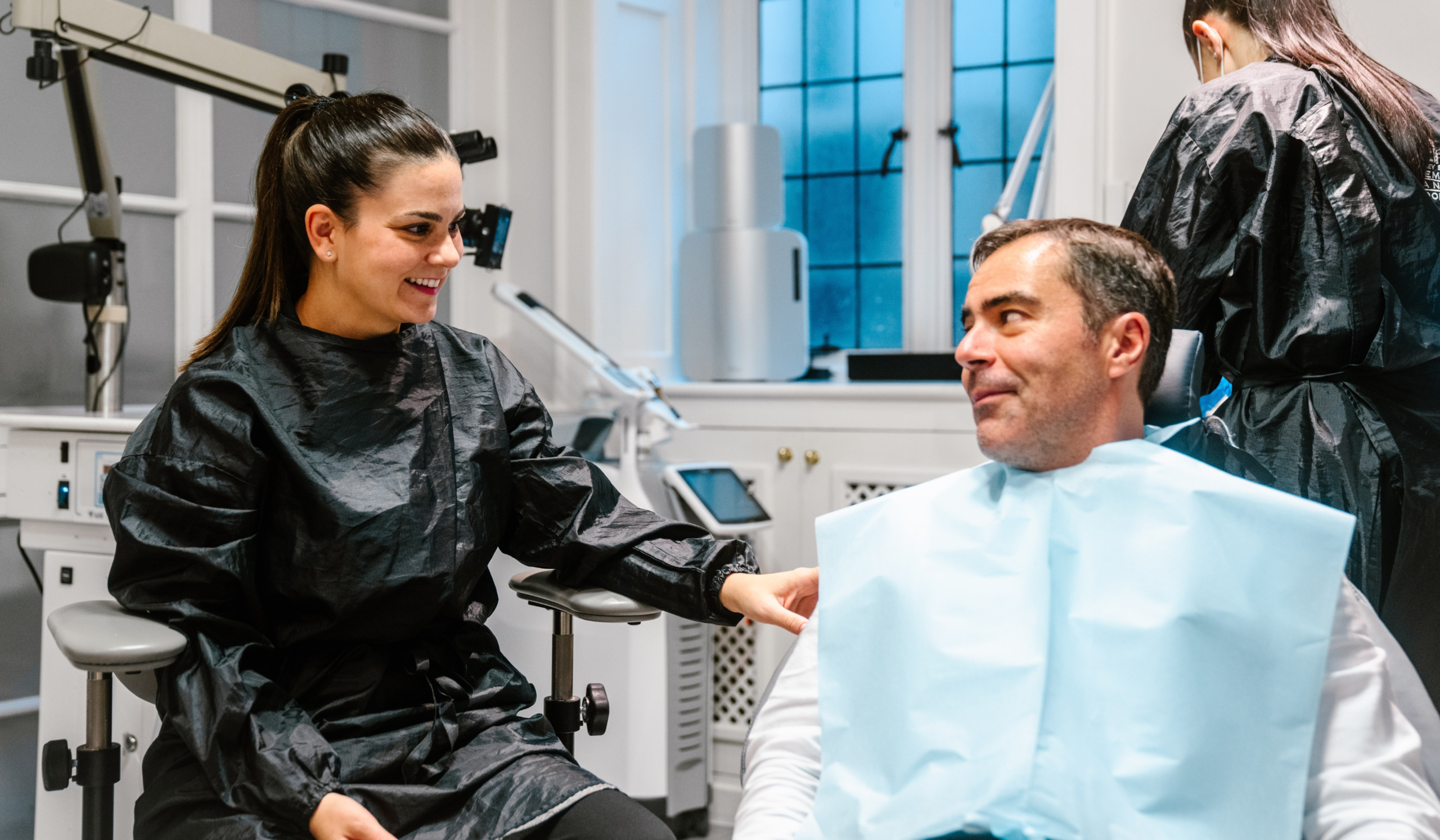
Root Canal Treatment vs Extraction (and Implants)
Root Canal Treatment + Crown
- Preserves your natural tooth and bite
- Typically faster recovery and lower overall cost than extraction + implant
- Maintains natural bone and gum shape
Extraction + Implant
- A strong option when a tooth is fractured below the bone, unrestorable, or has a poor long-term prognosis
- Involves multiple stages (healing, implant placement, restoration) and a longer timeline
- Higher cost and more visits, but excellent when indicated

Retreatment & Complex Cases
Sometimes a previous root canal treatment doesn’t heal as expected. Bacteria can persist in a hidden canal, under a leaking filling, or behind a missed crack. This necessitates retreatment.
We remove the old root filling materials, posts (if present), and any blockages, then repeat the cleaning, advanced disinfection, and sealing with today’s protocols. Success rates are high when the tooth is structurally sound and the restoration seals properly afterwards.
For stubborn lesions or anatomy we can’t address from the top, apicectomy (a microsurgical procedure at the root tip) may be appropriate. We plan this with CBCT and discuss it in plain language — including expected healing times and alternatives.
Costs & Payment Options
Clear, fixed fees — no surprises. At your consultation, we confirm the exact price before treatment and outline what’s included:
- Specialist assessment and targeted imaging (CBCT when indicated)
- Rubber dam isolation, microscope-led treatment
- Advanced irrigation and laser-assisted disinfection
- Obturation and a high-quality temporary or permanent restoration
- A written report for you and your dentist
What’s not included: the final crown or onlay. We’ll coordinate this with your dentist post-treatment.
Retreatment & complex cases: fees reflect the extra time to remove posts, negotiate calcified canals, or manage brokeninstruments. You’ll get a clear plan either way.
NHS vs private: NHS access to specialist endodontics is limited, especially for molars and complex cases. Private treatment gives faster access, advanced imaging and protocols, and predictable appointment times. If you have questions on finance or staged care, ask us — we’ll map your options in plain English.

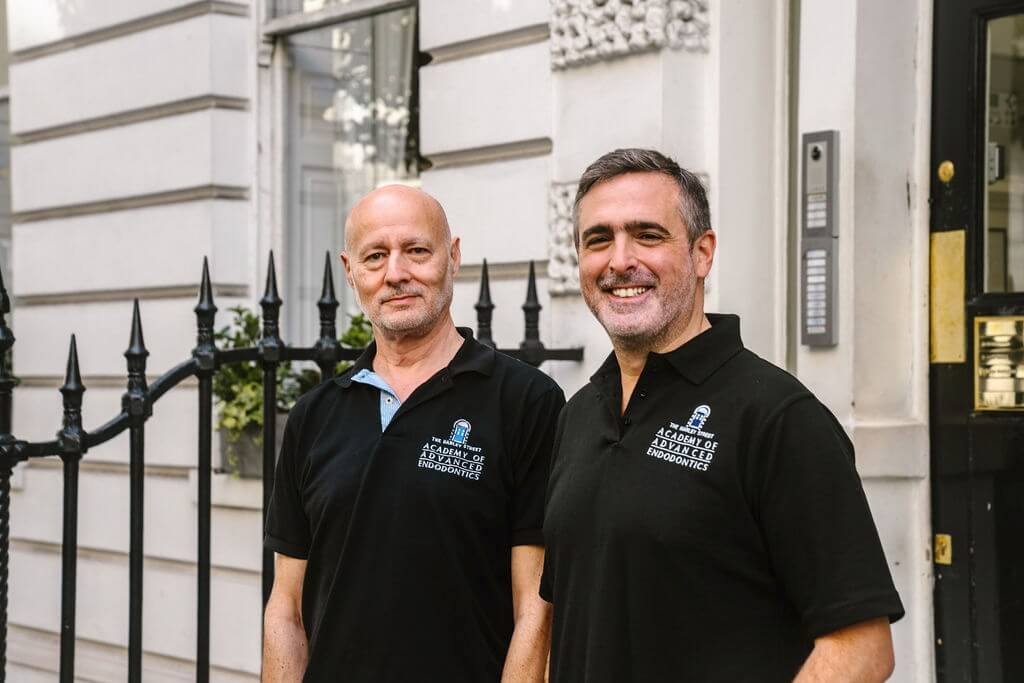
Why Choose Endo Academy on Harley Street
- Specialist endodontists with academic and teaching backgrounds
- Microscope-led care for every case, routine or complex
- CBCT 3D imaging when indicated for precise diagnosis and planning
- Laser-assisted disinfection to target bacteria beyond instruments
- Fixed, transparent fees and written treatment reports
- Calm, patient-first experience: we pace, explain, and check comfort
- Harley Street location with reliable appointment availability
Our location
99 Harley Street
Strategically located at the heart of London’s renowned medical district, the Academy of Advanced Endodontics enjoys its position on prestigious Harley Street, ensuring easy accessibility and a prime setting for patients and practitioners alike.
Take the first step towards pain-free, expert root canal care. Let us help you save your natural teeth and restore your oral health.
FAQs
Answering our most commonly asked questions.
What is a root canal treatment?
A treatment that removes inflamed or infected pulp from inside a tooth, cleans and disinfects the canals, then seals them to stop bacteria returning.
Does a root canal treatment hurt?
Not during treatment — we numb thoroughly and confirm comfort. Afterwards, you may feel bite tenderness for 24–72 hours, usually managed with over-the-counter pain relief.
How long does a root canal treatment take?
Rough guide: front teeth 60–90 minutes, premolars ~90 minutes, molars 120–150 minutes. Complex anatomy or retreatment can add time or require a second visit.
How much does a root canal treatment cost privately?
Fees depend on tooth type and complexity. You can explore our fees HERE. We confirm a fixed price at consultation and include a full breakdown. The final crown or onlay, if required, is priced separately.
Can antibiotics cure a root canal infection?
Antibiotics can calm spreading infection, but they don’t clean canals. The definitive fix is mechanical cleaning, disinfection, and sealing inside the tooth.
What are the success rates?
High when diagnosis is accurate, canals are thoroughly disinfected, and the final restoration seals well. We use CBCT and microscope techniques to improve predictability and will discuss your individual outlook.
Should treatment fail, which can be established either through a return of the pain symptoms or an x-ray showing no healing, further steps might need to be taken to eradicate the infection. These include redoing the root treatment, surgical techniques or possibly the extraction of the tooth.
What if my previous root canal treatment failed?
Retreatment removes old materials, finds missed canals, and repeats modern cleaning and sealing. Many teeth recover well. For persistent lesions, apicectomy may be appropriate.
How soon can I eat normally?
Same day for soft foods; protect the tooth until the final crown is placed. Avoid hard or sticky foods on that side for a few days.
Do you treat nervous patients?
Yes. We pace the appointment, explain each step, and check numbness before we start. If you’re particularly anxious we can also prescribe a pre-treatment sedative.
Still have a question?
Subscribe to our newsletter
Stay up to date with our latest news and events.
By clicking Sign Up you’re confirming that you agree with our Terms and Conditions.