
Tooth Abscess Treatment in London (Harley Street)
A tooth abscess is often the culprit of relentless pain. It can build slowly or strike fast, but once it’s here, it demands attention. At our Harley Street Endodontic practice, we treat the source of the infection with advanced diagnostics, fast relief, and specialist-led care.

5 Stars
From 220+ Google Reviews
Posted on Google
 Angus Hilleary
Trustindex verifies that the original source of the review is Google.
Extremely professional service. I was kept informed at every step and the procedure was swift and painless. Many thanks.Posted on Google Ozlem ThompsonDr. Kahan is an exceptional professional with a great sense of humor. He combines expertise with a warm and approachable manner, making every visit a positive experience. His professionalism and knowledge are outstanding, and he genuinely cares about his patients. Highly recommended!Posted on Google
 Gus GazzardClear, comprehensive, balanced explanation that put my son at his ease despite a difficult clinical situationPosted on Google
 Joe SoaresI found Richard Kahan very easy going, consultative and very focused on my needs also he was very structured on detailed explanations. Thoroughly knowledgeable and helpful.Posted on Google
 Ivana KKind, friendly and skilled staff, would highly recommend.Posted on Google
 Ian BeiderI was booked in very promptly (same day, in fact immediately) after I contacted the practice explaining that I was in severe pain. I was brought back the next day in the dentist's and nurse's lunch hour to relieve my situation. Very impressive and very much appreciated. I also received follow up communication after the appointment to enquire how I was. Overall all staff at the practice were very caring.Posted on Google
 Rachel SchreiberAmazing Service, Amazing Staff, Very HelpfulPosted on Google
 Meilech NeumannAmazing!

Specialist Endodontists

CBCT-Guided
Care

Fixed Transparent Fees
What is a Tooth Abscess?
A tooth abscess is a pocket of pus caused by a bacterial infection inside or around a tooth. It often forms when decay, trauma, or a failed filling allows bacteria to reach the pulp (the living tissue inside your tooth) or the surrounding bone and gum.

There are different types of abscesses:

Periapical Abscess:
At the tip of the root, usually due to pulp infection.

Periodontal Abscess:
In the gum and supporting bone around the tooth.

Combined:
When both occur together, especially in advanced cases.
Left untreated, an abscess can spread to surrounding tissues, cause bone loss, or lead to systemic infection. That’s why urgent care is important not just for pain relief, but also for protecting your overall health.
At The Harley Street Academy, we use advanced diagnostics and high-resolution CBCT imaging to accurately identify the source and act quickly. The goal is to stop the infection, save the tooth, and get you out of pain.
Symptoms of a Tooth Abscess
Some signs are hard to ignore, and others are more subtle. Sometimes, the nerve inside the tooth dies quietly — so you may not feel pain until the abscess is well-established. That’s why even mild symptoms, especially with a history of dental work or decay, shouldn’t be ignored. If you notice any of the following, it’s best that you get it looked at:
- Throbbing, persistent toothache, especially if it gets worse with pressure or at night
- Swelling in the gum, face, or jaw near a specific tooth
- Sensitivity to heat or cold that lingers after the source is gone
- Pain when chewing or touching the tooth
- A bad taste in your mouth or foul-smelling breath
- A visible pimple on the gum (also called a sinus tract) that may ooze
Fever, fatigue, or swollen lymph nodes if the infection is spreading

What Causes a Tooth Abscess?
Once bacteria enter, the body responds with inflammation and immune cells. Pus builds up as the infection progresses, and with nowhere to drain, pressure increases- causing pain and swelling. If left untreated, it can spread to surrounding tissues and even further, making early treatment critical.
A tooth abscess forms when bacteria reach the inner pulp of a tooth, usually through:
1
Deep tooth decay
that’s been left untreated
2
Cracks or fractures
in the enamel that let bacteria in
3
Leaky fillings
or repeated dental work on the same tooth
4
Gum disease (periodontitis)
that affects the tooth roots
4
Trauma
even without visible damage, a knock can compromise the pulp
Do I need to See a Dentist for a Tooth Abscess?
Yes- always. Tooth abscesses don’t go away on their own. Even if the pain fades, the underlying infection can remain active and silently spread. This isn’t something you can treat with home remedies or over-the-counter pain relief alone. Antibiotics may offer temporary relief, but they won’t address the source, which is the infected pulp inside the tooth.
Left untreated, abscesses can lead to:
- Severe pain and facial swelling
- Damage to nearby teeth or bone
- Sinus involvement or jaw stiffness
- Systemic infection, which in rare cases can become life-threatening
The earlier you’re seen, the easier it is to treat and the better the chance of saving your natural tooth.

How we treat abscessed teeth at Endo Academy
At Endo Academy, abscess treatment is handled with precision, experience, and a calm, considered approach. Our goal is always to eliminate the infection, preserve your natural tooth wherever possible, and relieve your discomfort quickly and safely.
Specialist Diagnostics
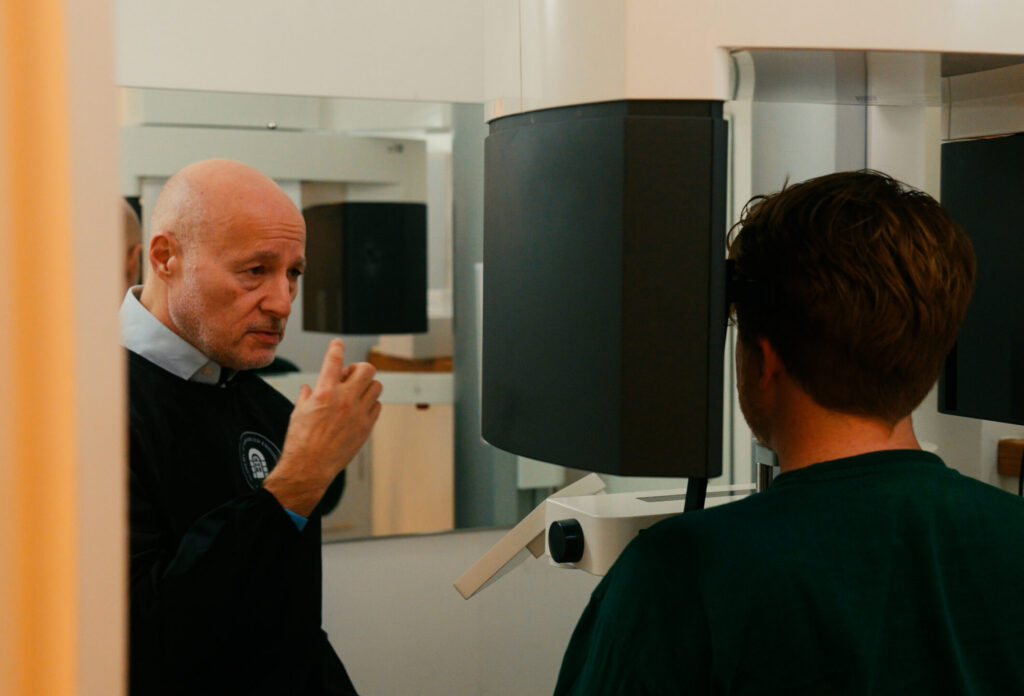
We start with a detailed clinical exam and high-resolution CBCT 3D imaging to assess the extent of the infection. This allows us to confirm whether a root canal is appropriate and rule out complications like fractures or bone loss.
Microscope-led root canal treatment

For most abscesses, root canal treatment is the gold standard. Under high magnification, we clean out the infected pulp, disinfect the canals using modern protocols (including laser-assisted irrigation), and seal them to prevent bacteria from returning.
Laser Disinfection
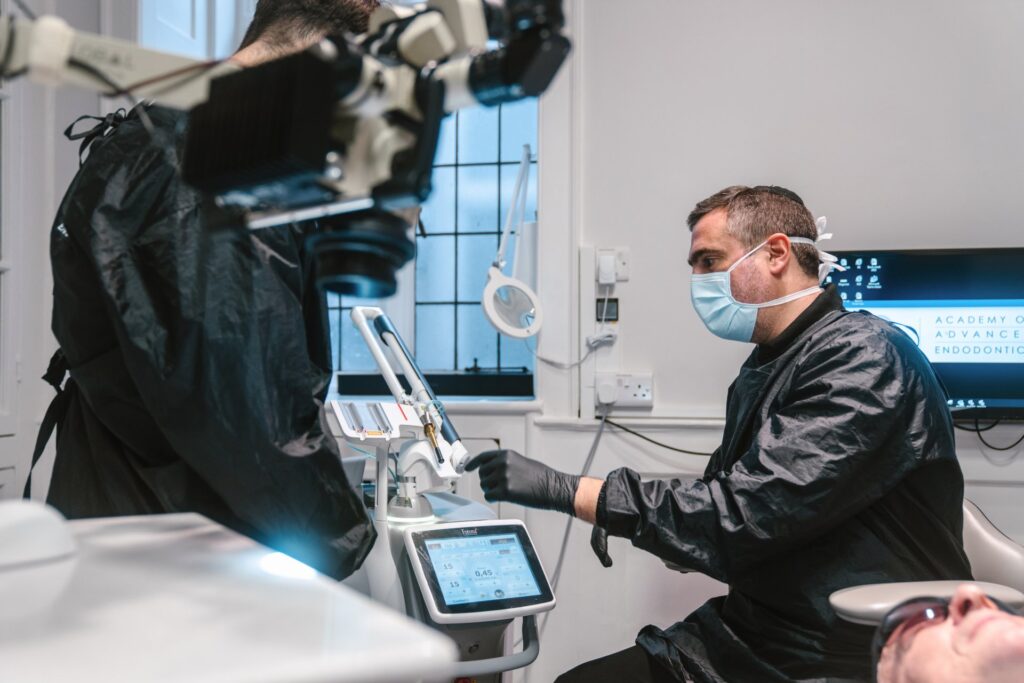
We use state-of-the-art laser technology to thoroughly disinfect the injected canal once accessed. This is next-gen technology which makes disinfection more predictable.
Surgical intervention if needed

In rare cases, if the infection is persistent or located at the root tip in a hard-to-access area, a minor surgical procedure (apicectomy) may be recommended. We’ll walk you through this option only if needed.
Follow-up and long-term care

You’ll leave with clear aftercare instructions, a full written report, and a plan for final restoration, usually a crown, to protect the tooth long term. Our team is here if you have questions or need reassurance at any point in your recovery.
Costs & Payment Options
Clear, fixed fees — no surprises. At your consultation, we confirm the exact price before treatment and outline what’s included:
- Specialist assessment and targeted imaging (CBCT when indicated)
- Rubber dam isolation, microscope-led treatment
- Advanced irrigation and laser-assisted disinfection
- Obturation and a high-quality temporary or permanent restoration
- A written report for you and your dentist
What’s not included: the final crown or onlay. We’ll coordinate this with your dentist post-treatment.
Retreatment & complex cases: fees reflect the extra time to remove posts, negotiate calcified canals, or manage brokeninstruments. You’ll get a clear plan either way.
NHS vs private: NHS access to specialist endodontics is limited, especially for molars and complex cases. Private treatment gives faster access, advanced imaging and protocols, and predictable appointment times. If you have questions on finance or staged care, ask us — we’ll map your options in plain English.


Why Choose Endo Academy on Harley Street
- Specialist endodontists with academic and teaching backgrounds
- Microscope-led care for every case, routine or complex
- CBCT 3D imaging when indicated for precise diagnosis and planning
- Laser-assisted disinfection to target bacteria beyond instruments
- Fixed, transparent fees and written treatment reports
- Calm, patient-first experience: we pace, explain, and check comfort
- Harley Street location with reliable appointment availability
Our location
99 Harley Street
Strategically located at the heart of London’s renowned medical district, the Academy of Advanced Endodontics enjoys its position on prestigious Harley Street, ensuring easy accessibility and a prime setting for patients and practitioners alike.
Take the first step towards pain-free, expert root canal care. Let us help you save your natural teeth and restore your oral health.
FAQs
Answering our most commonly asked questions.
Is a tooth abscess a dental emergency?
Yes. If you’re experiencing severe pain, swelling, or a bad taste in your mouth, it could indicate a spreading infection. Left untreated, abscesses can lead to complications. We recommend seeking prompt care, even same-day treatment where appropriate.
Can antibiotics alone fix a tooth abscess?
Not permanently. Antibiotics may temporarily calm the infection or buy time, but they don’t remove the source—infected tissue inside the tooth. The only lasting solution is to physically clean, disinfect, and seal the canals (via root canal treatment) or remove the tooth.
Will I lose the tooth if I have an abscess?
Not necessarily. Many abscessed teeth can be saved with timely root canal treatment. We assess each case carefully and recommend extraction only if the tooth is fractured, non-restorable, or poses a risk to your health.
Is root canal treatment painful?
No. With modern anaesthesia and careful technique, the procedure itself is comfortable. Most patients feel significant relief from the pain they had before treatment. Post-treatment tenderness is common for a couple of days but is manageable with pain relief.
How long does it take to recover?
Most people return to normal eating and activities within a few days. The area may be tender initially, but full healing—especially if there was swelling—can take a few weeks.
How do I know if my swelling is from an abscess?
Swelling that’s localised near a tooth, especially with pain or a bad taste, often points to an abscess. Facial swelling, warmth, or difficulty opening your mouth may signal a more serious spread of infection. If in doubt, get assessed quickly—especially if you develop fever or feel unwell.
Can an abscess come back?
If the tooth isn’t fully sealed or bacteria remain, a reinfection is possible. At Endo Academy, we use advanced imaging and disinfection techniques to reduce this risk. We’ll also advise on long-term care, including any restoration needed to protect the tooth.
Can I wait and see if it gets better?
We don’t recommend it. Abscesses rarely go away on their own and can worsen quickly. If in doubt, it’s safest to get checked early.
Can I pop an abscess at home?
No. Attempting to drain or pop a dental abscess at home can worsen the infection, introduce more bacteria, or delay proper care. Always seek professional treatment. If the abscess drains spontaneously, it still needs full cleaning and disinfection to resolve the issue at its source.
What causes a tooth abscess in the first place?
An abscess is usually caused by bacteria entering the tooth through deep decay, a crack, trauma, or failed dental work. Once bacteria reach the pulp (nerve space), the body responds with inflammation and pus formation. Left untreated, it can spread to the bone or surrounding tissues.
What’s the difference between a gum abscess and a tooth abscess?
A gum (periodontal) abscess starts in the space between the tooth and gum, usually due to gum disease. A tooth (periapical) abscess originates from inside the tooth, typically from an infected pulp. While symptoms can overlap, treatment approaches differ. We use specialist tests and imaging to diagnose the source accurately.
Can I go to A&E for a tooth abscess?
A&E should only be used if the infection is severe—such as swelling affecting breathing or vision, or if you’re experiencing fever, chills, or spreading redness. For most abscesses, urgent dental care is the best first step. At Endo Academy, we can usually see patients promptly and start treatment to relieve pain and stop progression.
Still have a question?
Subscribe to our newsletter
Stay up to date with our latest news and events.
By clicking Sign Up you’re confirming that you agree with our Terms and Conditions.