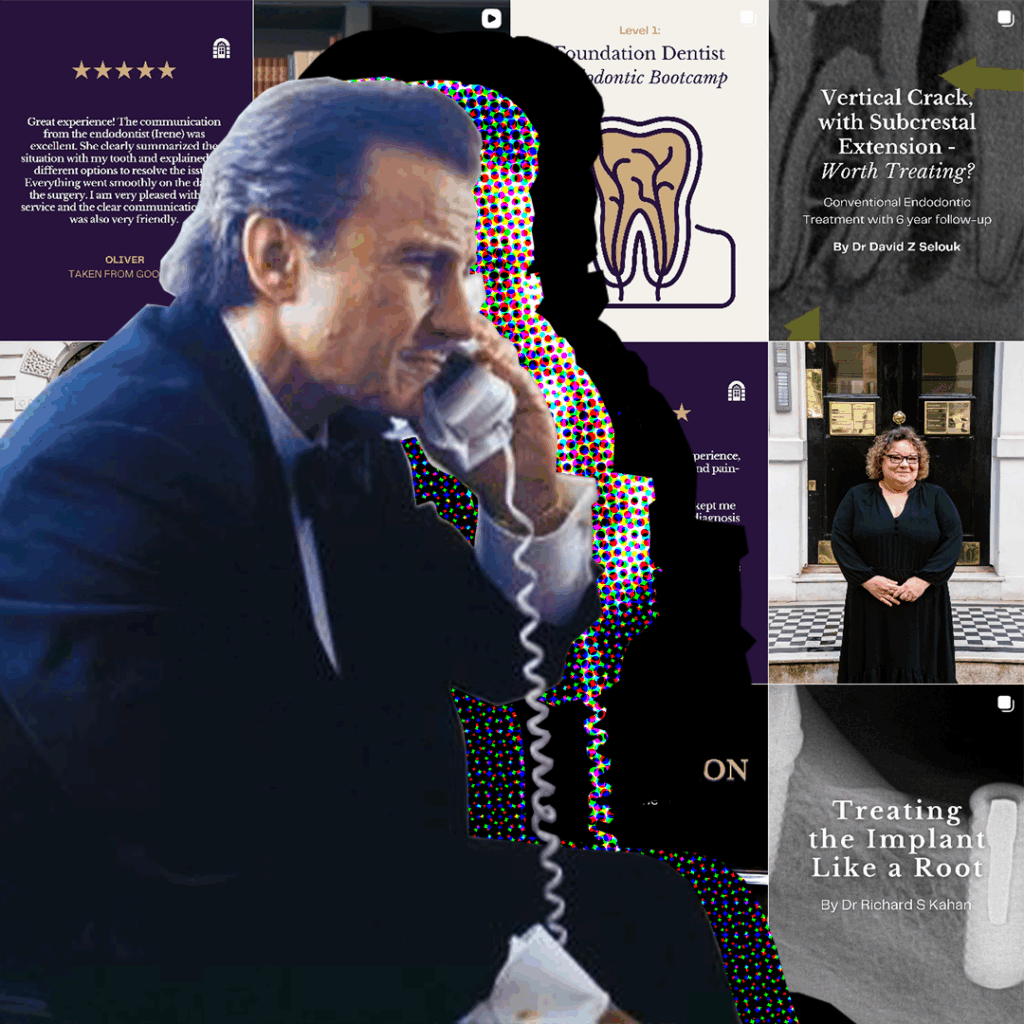
Being a repeat offender in posting innovative techniques, self-promotion and slick nonsense on social media, this article comes as a suitable reminder of our professional ethical responsibilities. The paper gives a fair summary of the benefits and dangers of social media in endodontic education. On the positive side, it allows rapid sharing of ideas, wider access to techniques, and useful visual learning for students and practitioners. On the negative side, it allows misinformation, commercial influence, exaggerated claims and poor practice to spread far faster than proper evidence can keep up. In a specialty like endodontics, where a good-looking case can be very persuasive, that is a real problem.
The article is at its best when it highlights the difference between what becomes popular online and what is actually scientifically validated. A technique can look impressive in a short video and still be biologically unsound, poorly tested or suitable only in very specific hands. Endodontics is especially vulnerable because poor treatment may appear successful for quite a long time before the failure becomes obvious. By then, the post has done its work, the likes have been gathered, and everyone has moved on to the next great idea.
Where I am less convinced is in the suggestion that this can be controlled by a framework of ten regulations or principles set out in the article. That sounds neat on paper, but in reality it is very unlikely to work. This is not so different from the wider problem of fake news. Bad information travels quickly, and people who want to bend the truth usually find a way around the rules. Disclosure of interests is all very well, but it is hardly difficult to hide bias behind selective presentation, vague wording or convenient silence.
To my mind, the answer is not more regulation but better education. The profession has always had its enthusiasts, opportunists and sellers of snake oil and miracle cures. Social media has simply made them louder and easier to find. The real defence is to teach scepticism from the beginning. Students and young clinicians need to be trained to ask basic but important questions. Where is the evidence? What are the long-term outcomes? What is being left out? Who stands to gain? Is this actually better, or just newer and better filmed?
That, for me, is also the proper way to read academic research, which is of course the territory of these reviews. We need the academic papers I discuss in View from the Roof, but they need to be read with a deep understanding of their limitations. I rather enjoy that process. Reading a paper should be a dialogue between the reader and the author: how would I research this topic, and have they done an adequate job? Challenge it. Do not just let it wash over you in passive acceptance. The same mindset should apply to social media, only with even more caution. That gives me an idea! Perhaps I should branch out and produce a social media version of View from the Roof.
We should not be trying to make social media respectable by wrapping it in guidance documents and hoping for the best. We should be producing clinicians who are much harder to fool.
So this article is useful and timely, and it does a good job of describing the problem. But I do not think regulation will solve it. Attempts to control this kind of space will usually fail or achieve very little. The future lies in teaching people to question everything, to be wary of confident claims without substance, and to understand that popularity is not proof. That is where the real responsibility sits, and that is what education should be trying to build.