
Apicectomy Treatment in London (Harley Street)
An apicectomy, also known as ‘root-end surgery’, is a precise microsurgical procedure designed to remove persistent infection at the tip of a tooth root while preserving the natural tooth itself.

5 Stars
From 220+ Google Reviews
Trustindex verifies that the original source of the review is Google. Extremely professional service. I was kept informed at every step and the procedure was swift and painless. Many thanks.Trustindex verifies that the original source of the review is Google. Dr. Kahan is an exceptional professional with a great sense of humor. He combines expertise with a warm and approachable manner, making every visit a positive experience. His professionalism and knowledge are outstanding, and he genuinely cares about his patients. Highly recommended!Trustindex verifies that the original source of the review is Google. Clear, comprehensive, balanced explanation that put my son at his ease despite a difficult clinical situationTrustindex verifies that the original source of the review is Google. I found Richard Kahan very easy going, consultative and very focused on my needs also he was very structured on detailed explanations. Thoroughly knowledgeable and helpful.Trustindex verifies that the original source of the review is Google. Kind, friendly and skilled staff, would highly recommend.Trustindex verifies that the original source of the review is Google. I was booked in very promptly (same day, in fact immediately) after I contacted the practice explaining that I was in severe pain. I was brought back the next day in the dentist's and nurse's lunch hour to relieve my situation. Very impressive and very much appreciated. I also received follow up communication after the appointment to enquire how I was. Overall all staff at the practice were very caring.Trustindex verifies that the original source of the review is Google. Amazing Service, Amazing Staff, Very HelpfulTrustindex verifies that the original source of the review is Google. Amazing!
Sometimes a root canal treatment does everything right, and the tooth still refuses to settle. Infection lingers, symptoms return, or healing stalls despite careful care. That’s where apicectomy comes in.
An apicectomy, also known as ‘root-end surgery’, is a precise microsurgical procedure designed to remove persistent infection at the tip of a tooth root while preserving the natural tooth itself. The aim is simple: eliminate the source of infection, protect the surrounding bone, and give the tooth another chance to function comfortably for years to come.
Specialist endodontists • CBCT-guided care • Fixed transparent fees
What is an apicectomy?
An apicectomy, sometimes called root-end surgery, is a minor surgical procedure used to treat infection that remains at the tip of a tooth root after root canal treatment.
While root canal treatment successfully resolves most infections, some cases are more complex. Infection may persist deep within the bone, behind curved canals, or beyond the reach of conventional retreatment. In these situations, approaching the problem from the root tip allows us to remove the source of infection directly.
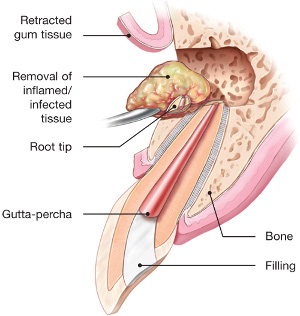
During an apicectomy, a small opening is made in the gum to access the affected root tip. The infected tissue is carefully removed, the end of the root is cleaned, and a small filling is placed to seal it securely. The surrounding area is then closed to allow healing to begin.
It sounds technical, and it is, but the principle is straightforward: remove the problem at its source while preserving the tooth.

Do you need an apicectomy?
Most root canal treatments heal exactly as expected. But occasionally, a tooth doesn’t respond as planned, even when the treatment itself was carried out correctly.
An apicectomy is usually recommended when infection persists at the root tip and cannot be predictably resolved through conventional root canal retreatment alone.
You may be advised to consider an apicectomy if:
- A previous root canal treatment has failed to heal fully
- Symptoms return months or years after treatment
- A persistent infection remains visible on X-rays or CBCT scans
- The canal system is blocked by posts, crowns, or complex anatomy
- Retreatment from inside the tooth carries a high risk of damaging the restoration
- Infection sits beyond the reach of conventional root canal techniques
Sometimes, the tooth itself feels normal, but imaging reveals that healing hasn’t occurred as expected. In other cases, discomfort, swelling, or repeated infection makes it clear that further treatment is needed.
An apicectomy is not usually the first option- it’s recommended when careful assessment shows that a surgical approach offers the best chance of resolving infection while preserving the tooth.
Signs a previously treated tooth may need further care
A tooth that has already had root canal treatment should usually settle and remain comfortable. But if infection persists or returns, symptoms can reappear- sometimes slowly, sometimes without much warning.
Common signs that a previously treated tooth may need further treatment include:
- Persistent tenderness when biting or chewing
- Swelling in the gum near a treated tooth
- A small pimple on the gum that drains occasionally
- Recurring discomfort in a tooth that once felt settled
- A feeling of pressure around the tooth
- Symptoms that improve temporarily, then return
- A shadow or lesion visible on follow-up X-rays
In some cases, there may be no noticeable symptoms at all. Infection can remain hidden beneath the surface and only become visible on imaging. That’s why routine follow-up and careful assessment are so important after root canal treatment.
If a treated tooth doesn’t feel quite right- or if symptoms return after a period of calm- it’s worth having it checked. Early assessment allows us to determine whether healing is progressing as expected or whether further treatment may be required.

Why not just repeat the root canal treatment?
When a root canal-treated tooth doesn’t heal as expected, retreatment is often the first option we consider. In many cases, repeating the procedure from inside the tooth can successfully resolve the problem.
But sometimes, retreatment isn’t the safest or most predictable route.
Certain teeth present structural or anatomical barriers that make conventional retreatment difficult. Posts, crowns, or bridges may block access to the canals. Removing them can risk damaging the tooth or compromising an otherwise sound restoration.
In other cases, infection may sit beyond the reach of standard instruments, deep at the root tip or within surrounding bone. Even carefully performed retreatment may not fully eliminate the source.
An apicectomy allows us to approach the infection from a different direction- directly at the root tip- without dismantling crowns or navigating inaccessible canals.
You may be advised to consider apicectomy instead of retreatment when:
- A crown, post, or bridge blocks safe access to the canals
- Previous retreatment has already been attempted
- Infection is located at the root tip and is unlikely to resolve internally
- Removing existing restorations would risk damaging the tooth
- The anatomy of the canals makes conventional retreatment unpredictable
Sometimes the best treatment isn’t repeating what’s already been done- it’s choosing a different approach that directly addresses the problem.
How we perform apicectomy at Endo Academy
1
Specialist diagnostics and planning
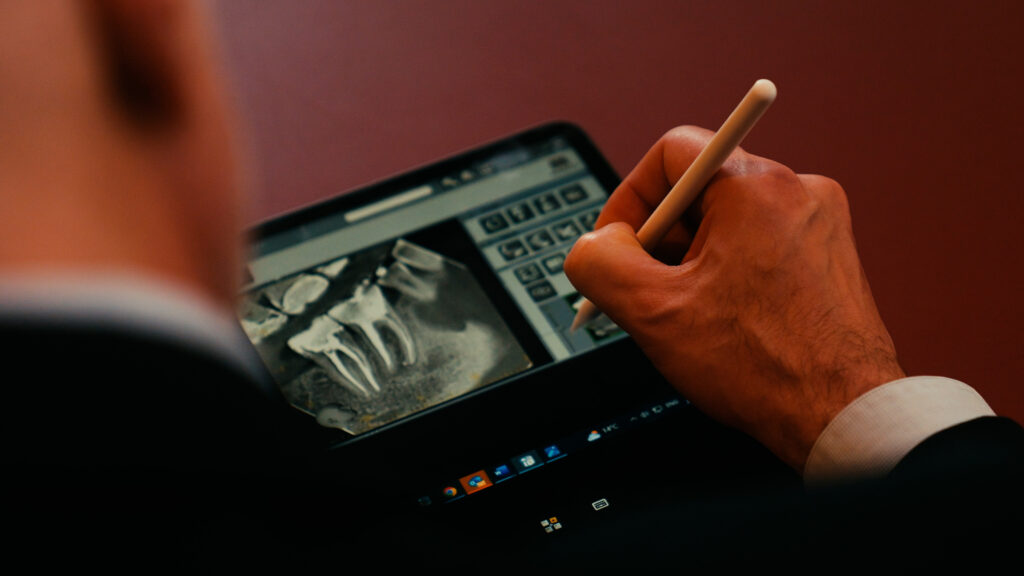
Every case begins with a detailed clinical assessment and targeted imaging. Where indicated, CBCT 3D scans allow us to visualise the root structure, surrounding bone, and the exact location of infection.
This level of planning allows us to approach the procedure with accuracy and confidence.
2
Microsurgical access
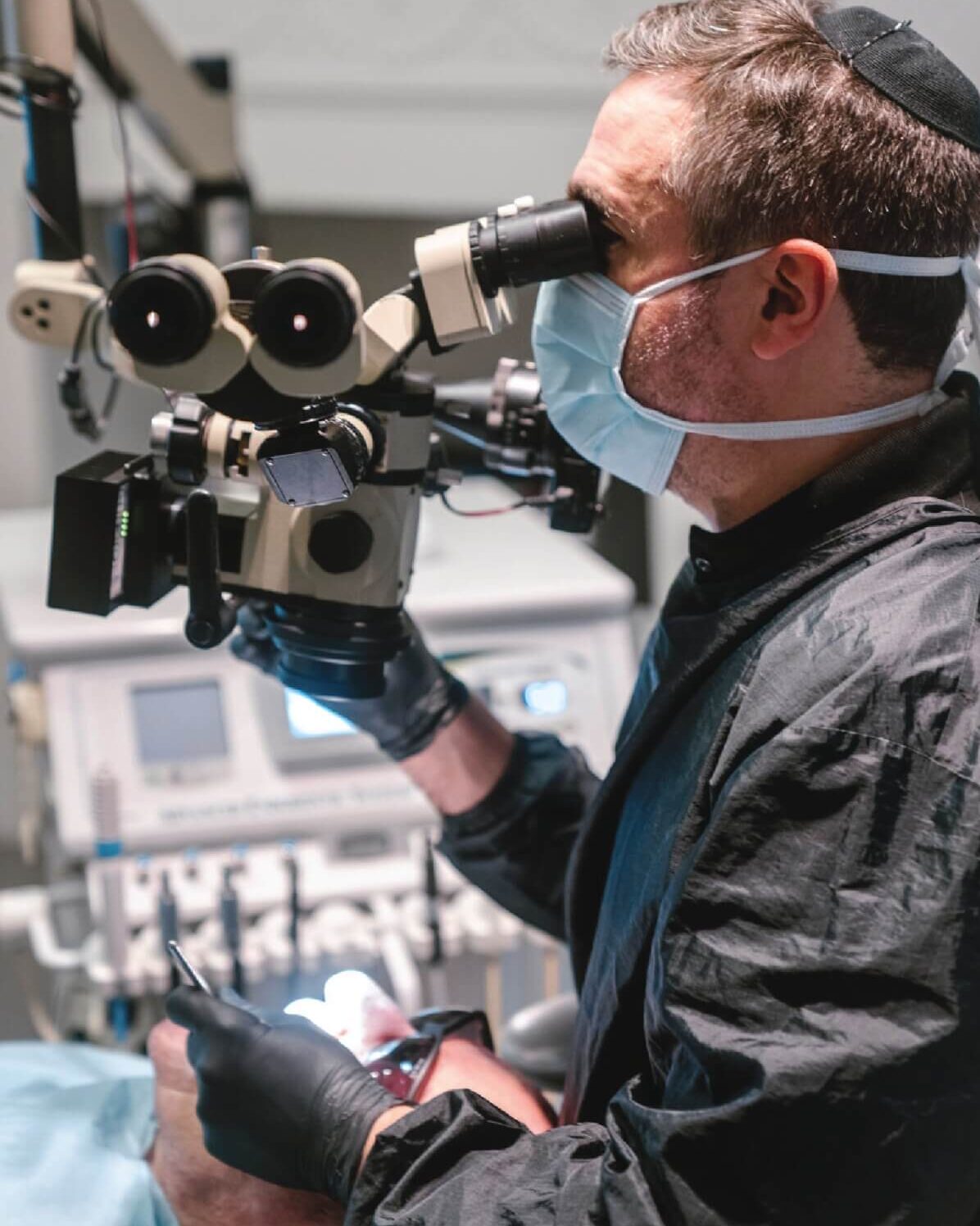
Under local anaesthetic, a small opening is made in the gum to reach the root tip. The procedure is performed using high magnification and microsurgical instruments, allowing precise access while minimising trauma to surrounding tissues.
Most patients are surprised by how controlled and methodical this stage feels.
3
Removal of infection and root-end sealing
The infected tissue at the root tip is carefully removed. A small portion of the root end is trimmed, cleaned, and sealed using a biocompatible material designed to prevent bacteria from returning.
This step is critical- it creates a secure barrier that allows healing to begin.
4
Closure and healing
Once the area has been cleaned and sealed, the gum is repositioned and sutured. Healing begins immediately, and detailed aftercare instructions are provided to support recovery.
We also schedule follow-up appointments to monitor healing and ensure the tooth settles as expected.
Does apicectomy hurt?
Short answer: no, not during the procedure.
Apicectomy is carried out under local anaesthetic, so the area is fully numbed before treatment begins. We carefully check that you are comfortable before starting, and most patients describe the experience as surprisingly manageable- more controlled than they expected.
After the procedure, it’s normal to experience mild tenderness or swelling around the treated area for a few days. This is part of the healing process and is usually well managed with routine pain relief.
We provide clear aftercare instructions and remain available if you have any concerns during recovery. Most patients return to normal daily activities quickly, with only minor adjustments during the initial healing period.
If you feel anxious about dental treatment, let us know. We take time to explain each step and ensure you feel informed and supported throughout.
Recovery after apicectomy
Recovery after an apicectomy is usually straightforward. Some swelling and tenderness are expected in the first few days, but most patients find symptoms settle steadily with time.
Here’s what the typical healing timeline looks like:
Day 1–2:
Mild swelling, tenderness, or bruising around the treated area is common. Applying a cold compress and taking recommended pain relief helps keep discomfort under control.
Day 3–5:
Swelling usually begins to reduce, and the area starts to feel more comfortable. Most patients can continue normal daily activities during this time.
Week 1:
Stitches are typically removed after 5–7 days. The gum tissue begins to look and feel more settled.
Weeks 2–4:
Surface healing continues, and discomfort should be minimal. Internal bone healing takes longer but progresses steadily.
Helpful recovery tips include:
Avoid chewing hard foods on the treated side for several days
Keep the area clean with gentle brushing
Follow any medication instructions carefully
Attend scheduled follow-up appointments
Most patients return to normal routines quickly, with only minor adjustments during the early healing period. We monitor healing carefully to ensure the infection resolves and the surrounding bone recovers as expected.
How successful is apicectomy?
Modern apicectomy (root-end surgery) has a strong track record when carried out with careful planning and microsurgical precision.
Success rates are generally high, particularly when the tooth is structurally sound and the source of infection is clearly identified. Advances in CBCT imaging, magnification, and biocompatible sealing materials have made outcomes more predictable than in the past.
Several factors influence long-term success, including:
- Accurate diagnosis before treatment
- Careful removal of infected tissue
- Effective sealing of the root tip
- The overall strength of the remaining tooth
- A well-maintained final restoration
It’s also important to remember that the goal of apicectomy is to preserve your natural tooth wherever possible. In many cases, the procedure allows a tooth that might otherwise be extracted to remain functional for many years.
We monitor healing over time using follow-up imaging, ensuring the surrounding bone recovers and the infection resolves as expected.

Apicectomy vs Extraction
When infection persists after root canal treatment, extraction may seem like the simplest solution. But removing a tooth is rarely the first choice if there is a predictable way to preserve it.
An apicectomy is designed to eliminate infection while keeping your natural tooth in place. Preserving your own tooth helps maintain normal chewing function, supports the surrounding bone, and avoids the need for more complex replacement options.
Apicectomy
Preserves the natural tooth and surrounding bone
Removes infection directly at the root tip
Avoids dismantling crowns or bridges in many cases
Often allows the tooth to function for many more years
Typically involves a shorter recovery compared to extraction and replacement
Extraction and replacement
(implant or bridge)
May be necessary if the tooth is fractured or not restorable
Requires removal of the tooth and healing time
Often involves multiple stages and appointments
May require bone grafting before implant placement
Usually carries a longer treatment timeline overall
Our goal is always to preserve natural teeth where possible. However, if a tooth cannot be predictably saved, we will explain this clearly and discuss alternative options with you.
Every recommendation is based on careful diagnosis, imaging, and long-term prognosis- not just short-term convenience.
Costs & Payment Options
At your consultation, we confirm the exact price before treatment and outline what’s included:
- Specialist assessment and targeted imaging (CBCT when indicated)
- Rubber dam isolation and microscope-led treatment
- Advanced irrigation and laser-assisted disinfection
- Obturation and a high-quality temporary or permanent restoration
- A written report for you and your dentist
What’s not included: the final crown or onlay. This is usually completed by your general dentist once the molar has settled, and we coordinate closely with them to ensure the tooth is protected long term.
0% finance with Tabeo


Why Choose Endo Academy on Harley Street
- Specialist endodontists with academic and teaching backgrounds
- Microscope-led care for every case, routine or complex
- CBCT 3D imaging when indicated for precise diagnosis and planning
- Laser-assisted disinfection to target bacteria beyond instruments
- Fixed, transparent fees and written treatment reports
- Calm, patient-first experience: we pace, explain, and check comfort
- Harley Street location with reliable appointment availability
Our location
99 Harley Street
Strategically located at the heart of London’s renowned medical district, the Academy of Advanced Endodontics enjoys its position on prestigious Harley Street, ensuring easy accessibility and a prime setting for patients and practitioners alike.
Take the first step towards pain-free, expert root canal care. Let us help you save your natural teeth and restore your oral health.
FAQs
Answering our most commonly asked questions.
What is an apicoectomy?
An apicoectomy, also known as root-end surgery, is a minor surgical procedure used to remove infection at the tip of a tooth root when a previous root canal treatment has not healed as expected. The infected tissue is removed, the root tip is sealed, and healing is allowed to take place.
Why would I need an apicoectomy after a root canal?
Most root canal treatments heal successfully, but occasionally infection persists at the root tip. This can happen due to complex root anatomy, blocked canals, or bacteria that cannot be reached through conventional retreatment. In these situations, apicoectomy allows direct access to the infection.
Is apicoectomy painful?
No- the procedure itself is carried out under local anaesthetic, so the area is fully numb. After treatment, mild soreness or swelling is normal for a few days, but this is usually manageable with standard pain relief and settles as healing progresses.
How long does an apicoectomy take?
An apicoectomy typically takes 60–90 minutes, depending on the location of the tooth and the complexity of the root structure. We provide a clear time estimate before treatment begins.
How long does recovery take after apicoectomy?
Initial healing usually takes one to two weeks, with stitches often removed after about 5–7 days. Most patients return to normal routines within a few days, although full internal healing of the bone can take several months.
Will my face swell after apicoectomy?
Some swelling is normal in the first few days after surgery. This is part of the healing process and usually settles gradually. Using cold compresses and following aftercare instructions helps reduce swelling and discomfort.
How successful is apicoectomy?
Modern apicoectomy procedures have high success rates, particularly when carried out using CBCT imaging and microsurgical techniques. Success depends on factors such as the condition of the tooth, accurate diagnosis, and proper sealing of the root tip.
What is the difference between apicoectomy and retreatment?
Retreatment involves reopening the tooth and cleaning the canals again from inside. Apicoectomy approaches the infection from the root tip through the gum. Surgery is usually recommended when retreatment is not possible or unlikely to resolve the infection fully.
Can an apicoectomy save my tooth?
In many cases, yes. The primary goal of apicoectomy is to preserve your natural tooth when conventional retreatment is not possible or predictable. Saving the natural tooth helps maintain normal chewing and supports surrounding bone.
What happens if I don’t have an apicoectomy?
If infection remains untreated, it may persist or worsen over time. This can lead to pain, swelling, bone loss, or the eventual need for tooth extraction. Early treatment helps prevent complications and improves the chances of saving the tooth.
Will I need time off work after apicoectomy?
Most patients return to normal daily activities within a day or two. Some prefer to take a short period of rest immediately after treatment, particularly if mild swelling or tenderness is present.
Are stitches used after apicoectomy?
Yes. Small sutures are used to close the gum after the procedure. These are usually removed within 5–7 days, depending on healing.
Can the infection come back after apicoectomy?
While success rates are high, there is always a small risk that infection can persist or recur. Careful diagnosis, precise sealing of the root tip, and regular follow-up appointments help reduce this risk significantly.
Is apicoectomy safe?
Yes. Apicoectomy is a well-established procedure performed routinely by specialist endodontists. With modern imaging, magnification, and microsurgical techniques, it is considered a safe and predictable way to manage persistent infection.
Will I need a crown after apicoectomy?
If the tooth already has a crown, it can usually remain in place. If additional restoration is required, we coordinate closely with your general dentist to ensure the tooth remains protected long term.
Still have a question?
Subscribe to our newsletter
Stay up to date with our latest news and events.
By clicking Sign Up you’re confirming that you agree with our Terms and Conditions.