

5 Stars
From 220+ Google Reviews
Trustindex verifies that the original source of the review is Google. Extremely professional service. I was kept informed at every step and the procedure was swift and painless. Many thanks.Trustindex verifies that the original source of the review is Google. Dr. Kahan is an exceptional professional with a great sense of humor. He combines expertise with a warm and approachable manner, making every visit a positive experience. His professionalism and knowledge are outstanding, and he genuinely cares about his patients. Highly recommended!Trustindex verifies that the original source of the review is Google. Clear, comprehensive, balanced explanation that put my son at his ease despite a difficult clinical situationTrustindex verifies that the original source of the review is Google. I found Richard Kahan very easy going, consultative and very focused on my needs also he was very structured on detailed explanations. Thoroughly knowledgeable and helpful.Trustindex verifies that the original source of the review is Google. Kind, friendly and skilled staff, would highly recommend.Trustindex verifies that the original source of the review is Google. I was booked in very promptly (same day, in fact immediately) after I contacted the practice explaining that I was in severe pain. I was brought back the next day in the dentist's and nurse's lunch hour to relieve my situation. Very impressive and very much appreciated. I also received follow up communication after the appointment to enquire how I was. Overall all staff at the practice were very caring.Trustindex verifies that the original source of the review is Google. Amazing Service, Amazing Staff, Very HelpfulTrustindex verifies that the original source of the review is Google. Amazing!

Specialist Endodontists

CBCT-Guided
Care

Fixed Transparent Fees
A tooth can stop hurting for the wrong reason.
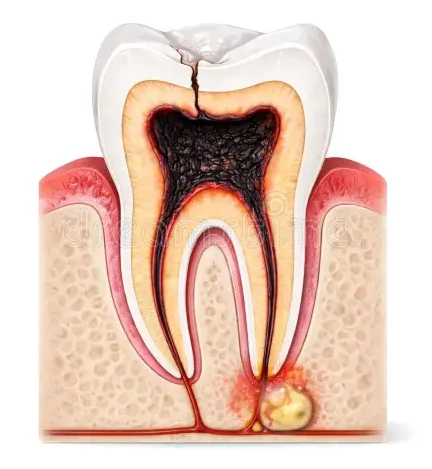
Pulp necrosis occurs when the living tissue inside a tooth dies, usually due to damage caused by deep decay, fracture, trauma or lots of dentistry (deep fillings and crowns). Once this happens, bacteria can spread through the root canal system causing abscess formation in the surrounding tissues.
At Endo Academy, we use specialist diagnostics and advanced endodontic treatment to remove the source of infection and preserve your natural tooth wherever possible.
What Is Pulp Necrosis?
Pulp necrosis is the medical term for the death of the dental pulp; the soft tissue inside your tooth containing nerves and blood vessels.
When the pulp becomes severely inflamed it can lose its blood supply, the tissue can no longer recover and gradually dies. This may happen following deep decay, a crack, direct trauma to the tooth or indirect trauma through deep fillings or preparing a tooth for a crown.
Once the pulp is necrotic, the tooth itself can often still be saved. However, the dead tissue creates an environment where bacteria can multiply within the root canal system and eventually cause abscess formation around the root.
This is why a “dead tooth” isn’t necessarily a lost tooth, but it does need proper assessment and, in many cases, root canal treatment.
What Causes Pulp Necrosis?
Pulp necrosis usually develops when the pulp becomes damaged. The subsequent inflammation causes swelling, there is no room for swelling within the closed space of the pulp chamber and the pulp strangles itself. The blood supply is compromised and the tissue can no longer recover. The process doesn’t always happen quickly. There is a gradual progressive necrosis through the pulp with cycles of inflammation and death. This is why pain can switch on and off as each section becomes inflamed and dies. In some teeth, the pulp deterioration is very slow, over months or even years, and there may be very few warning signs of pain along the way.
Common causes include:
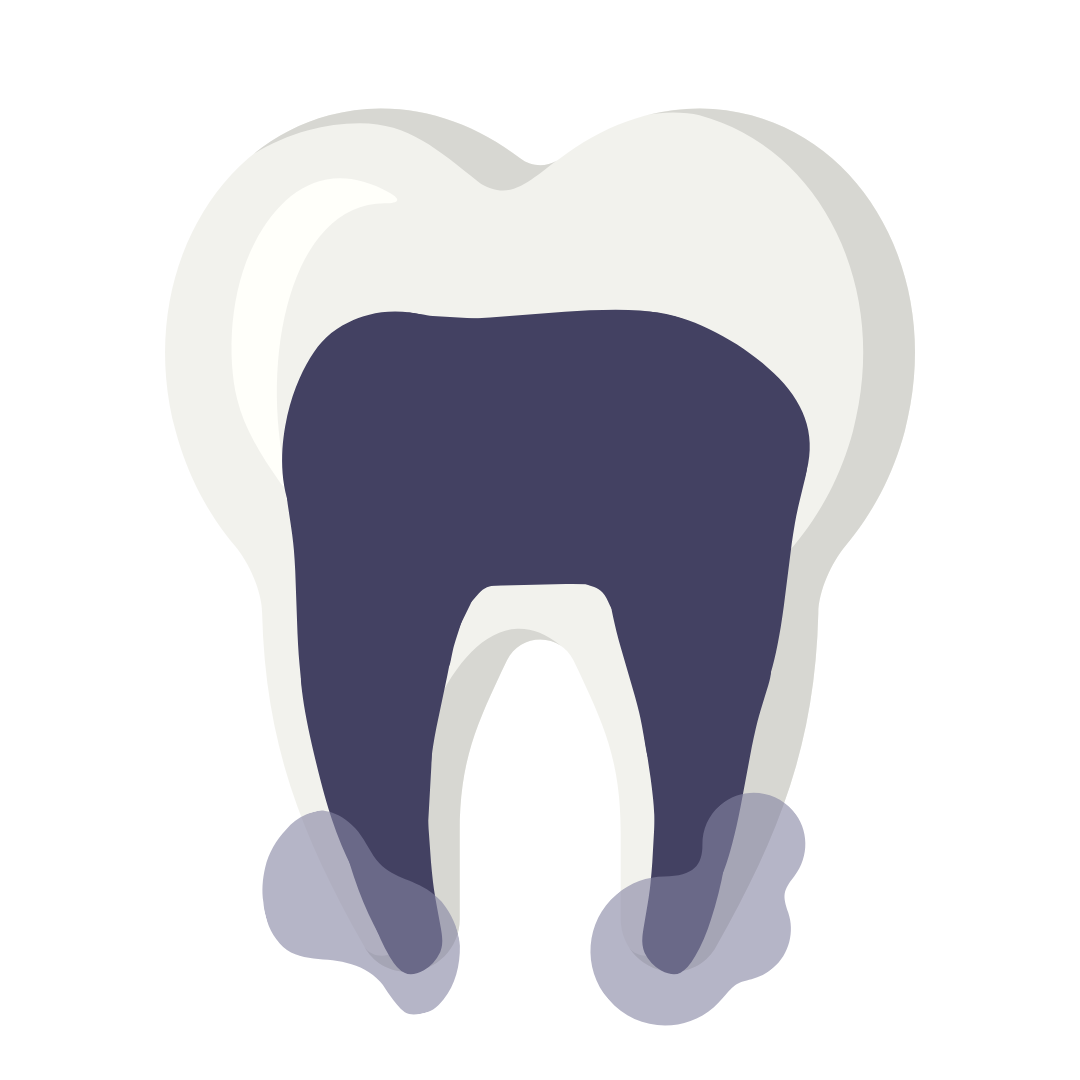
Deep tooth decay that allows bacteria to reach the pulp
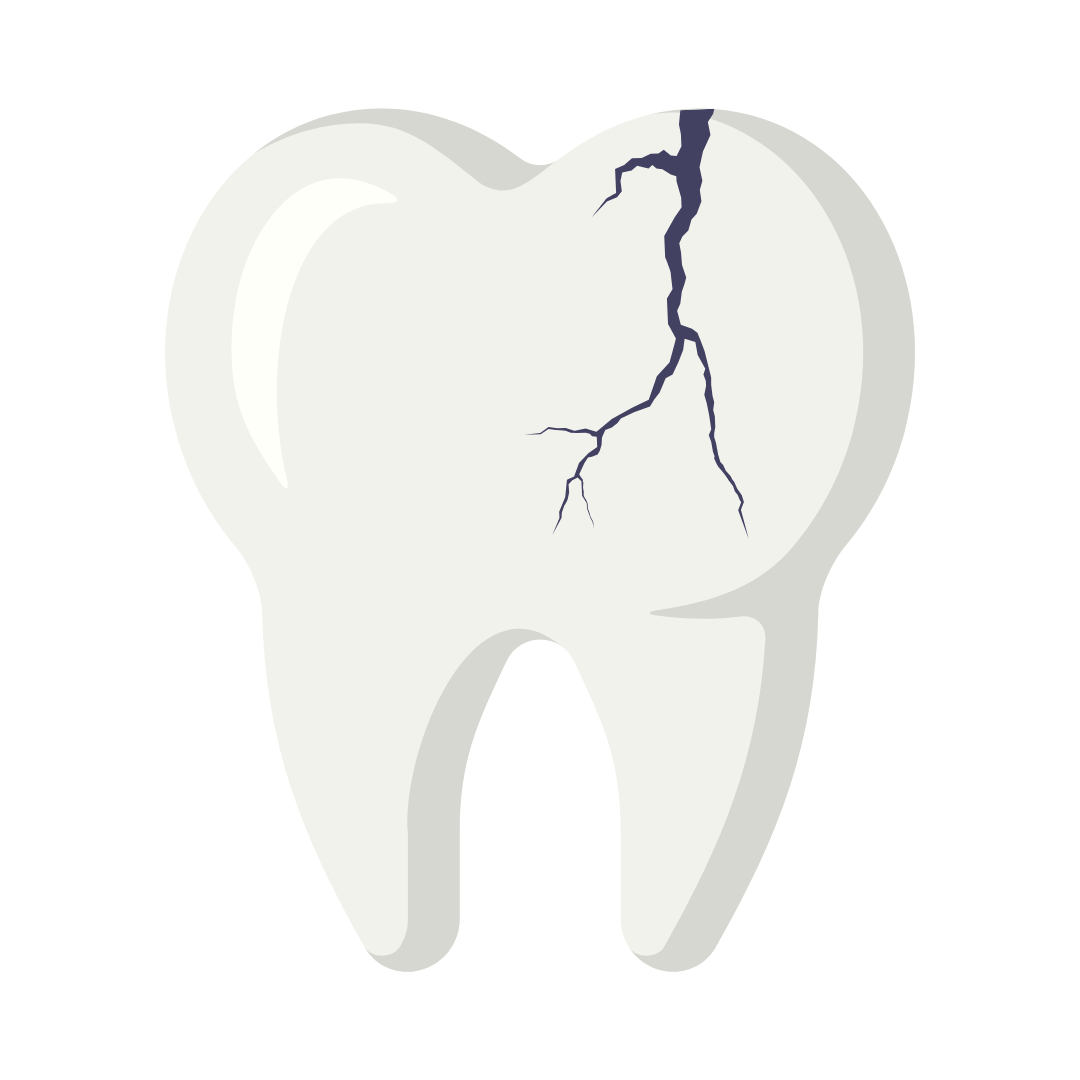
Cracks or fractures that create a pathway for bacteria into the tooth
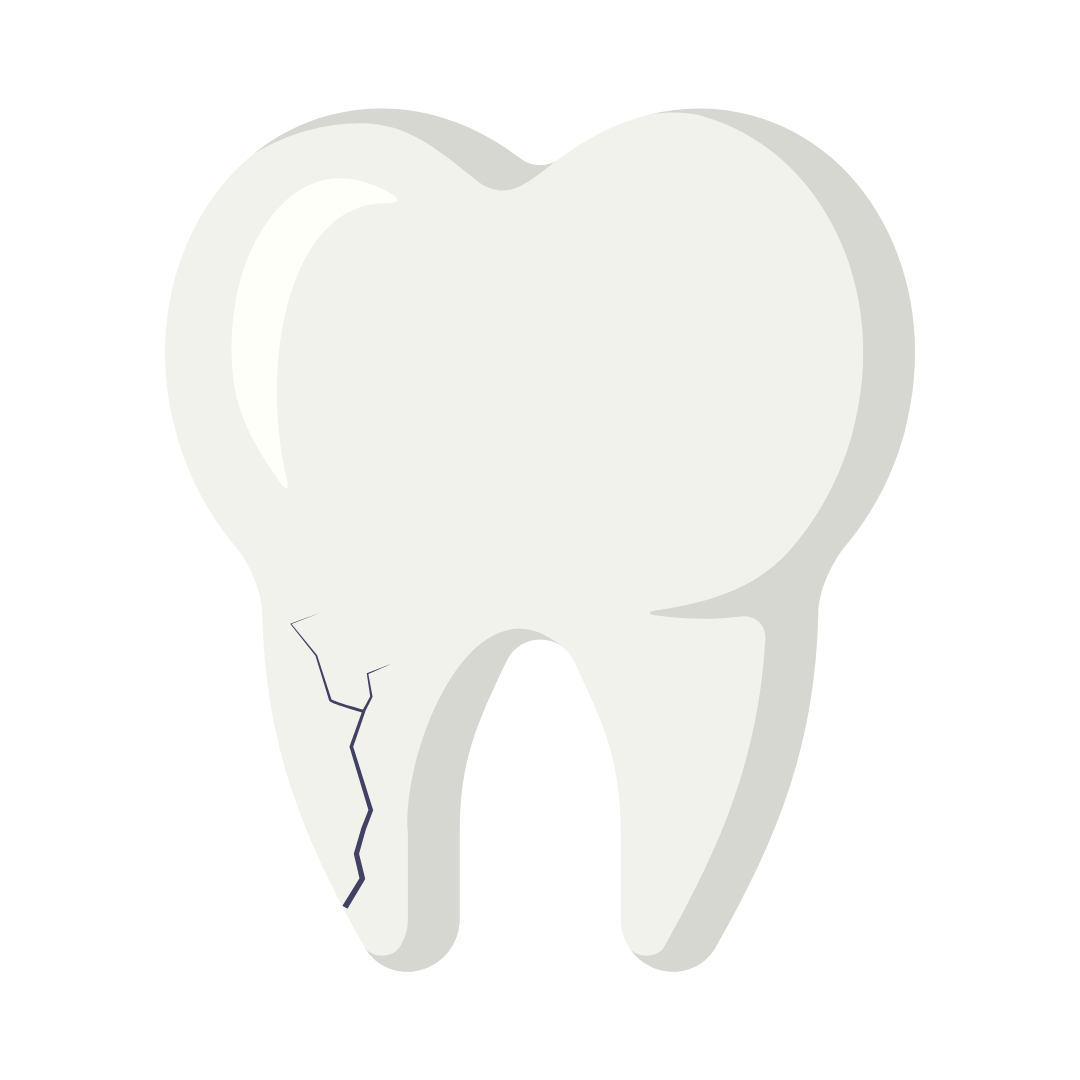
Dental trauma, even when there is no obvious external damage
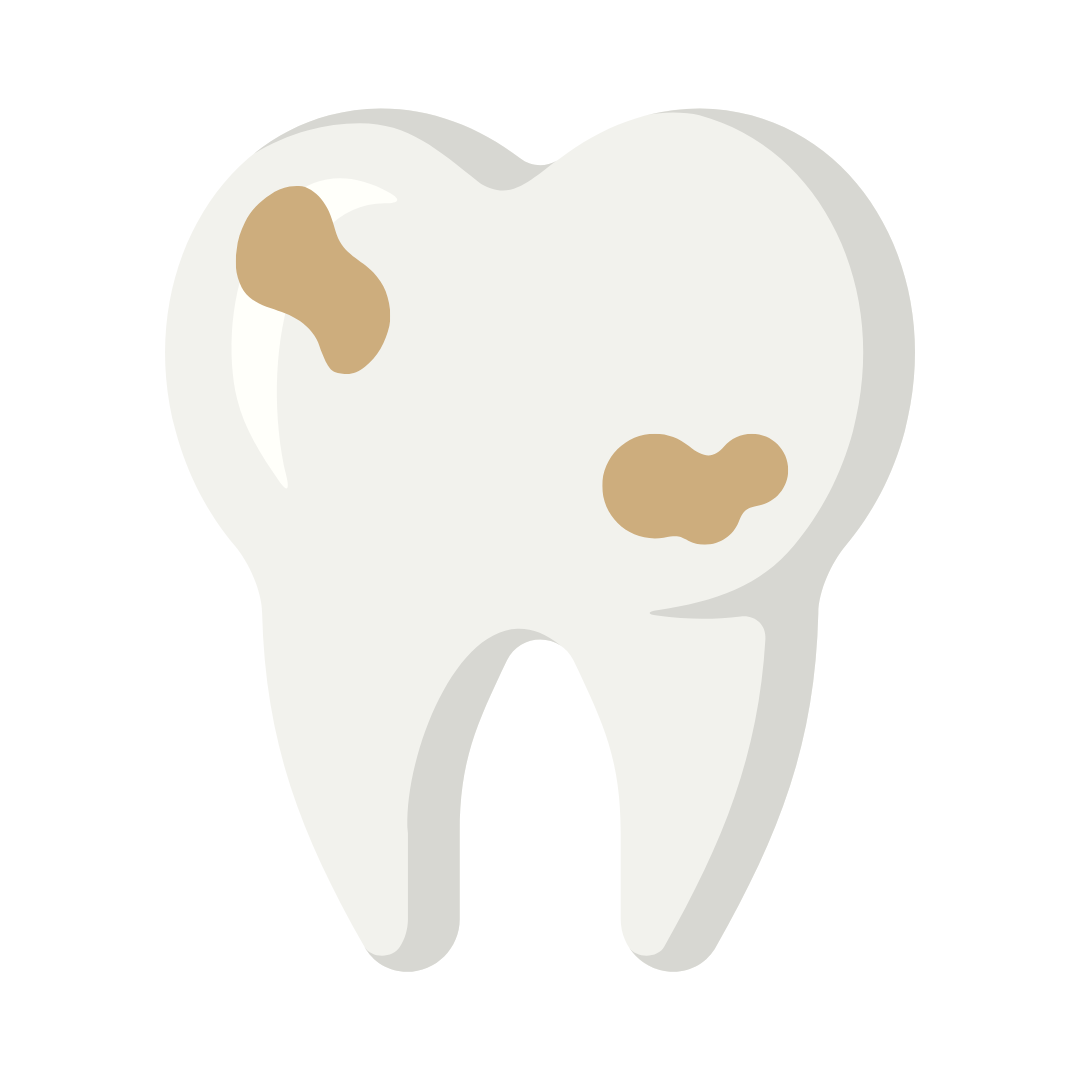
Repeated dental treatment on the same tooth
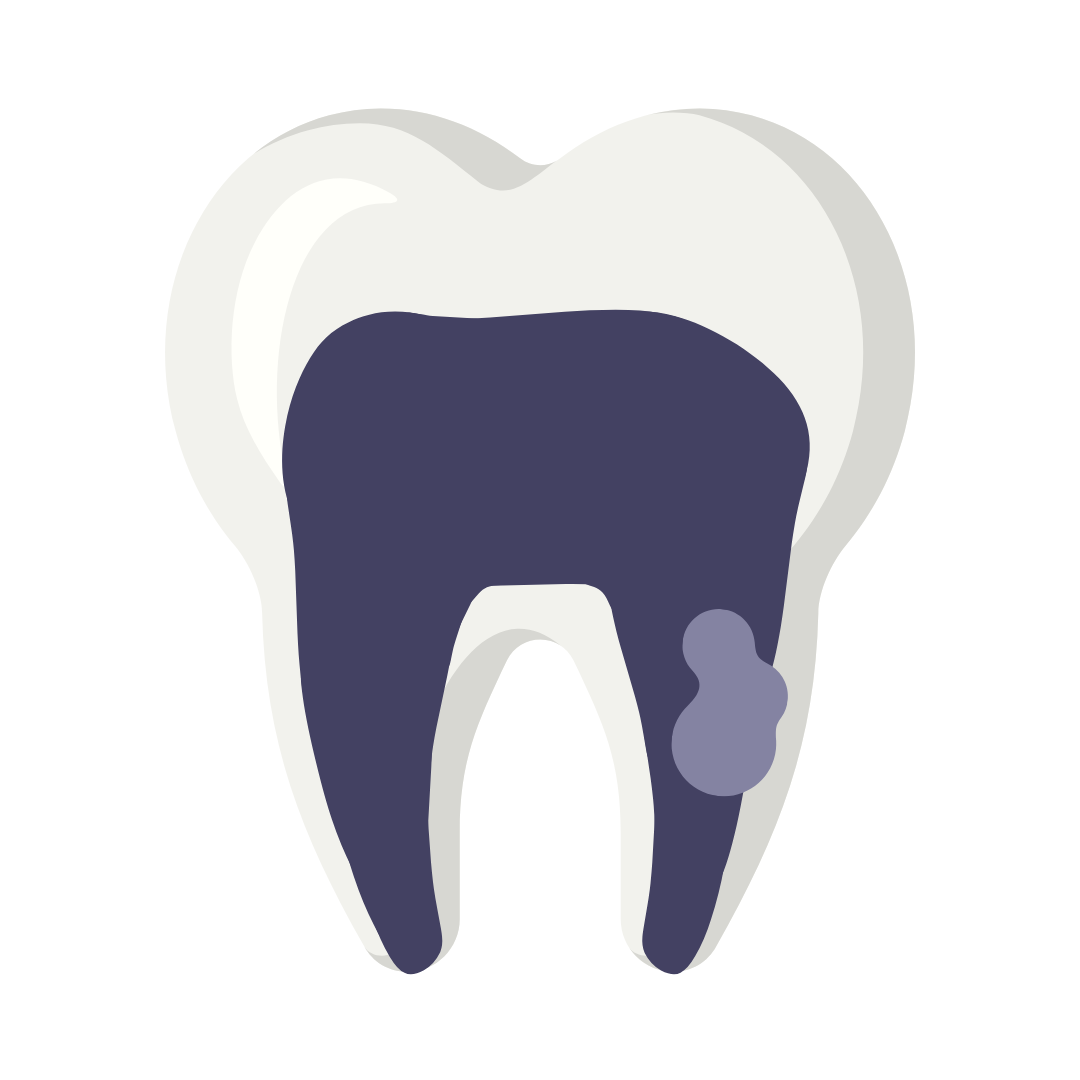
Long-standing pulp inflammation that progresses without treatment
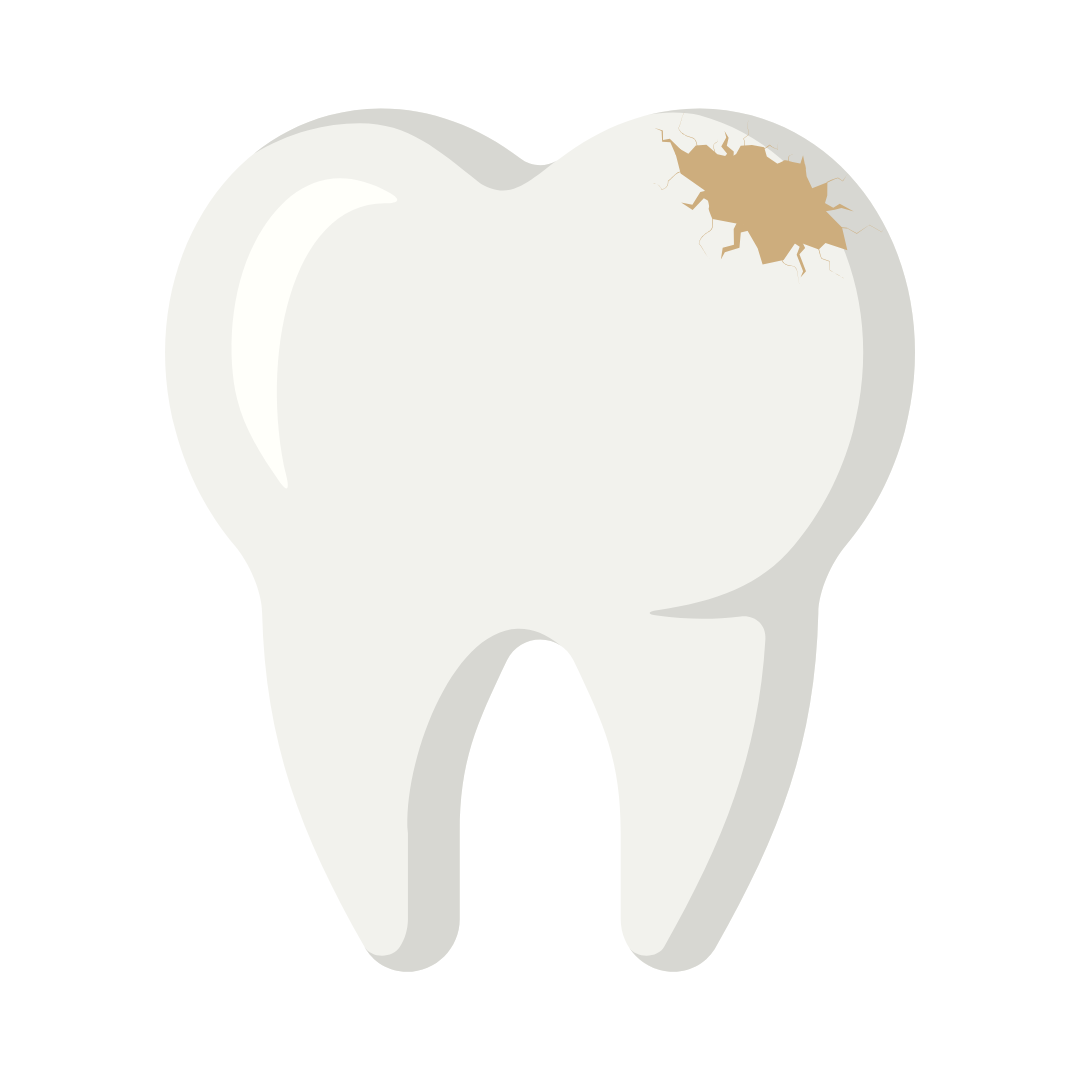
Large or leaking fillings that allow bacteria to enter
Signs and Symptoms of Pulp Necrosis
Pulp necrosis can be surprisingly difficult to spot. Some teeth cause significant pain as the pulp becomes inflamed, while others become completely symptom-free once the nerve has died. In some cases, there are no obvious symptoms at all, and pulp necrosis is only discovered during a dental examination or X-ray once abscess formation has occurred.
However, common signs and symptoms include:
- Toothache or a history of severe pain.
- Intense sensitivity to temperature
- Pain or tenderness when biting or chewing
- A tooth that becomes grey, brown, or darker in colour
- Swelling or tenderness around the gum
- A pimple on the gum (sinus tract) near the affected tooth
- A bad taste or discharge if infection is present
- Little or no response to hot or cold
Does a Dead Tooth Always Hurt?
No- and this is one of the reasons pulp necrosis can go unnoticed.
As the pulp becomes inflamed, a tooth may be extremely painful or sensitive to hot and cold. But once the nerve tissue dies, that pain can suddenly disappear. It can feel as though the problem has resolved when, biologically, the opposite has happened.
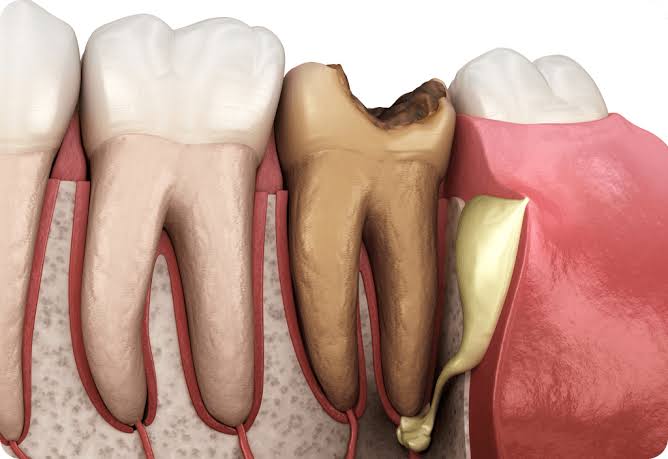
Bacteria enter the pulp spaces, either through the cavity, crack line, or through tiny channels in the root – sentinel tubules. They multiply inside the root canal system particularly bacteria that thrive in low oxygen environments. The toxins produced by these bacteria inside the tooth then cause inflammation, an abscess, or bone loss around the tooth.
So, if a painful tooth suddenly stops hurting, don’t assume it’s fixed itself. Sometimes, silence isn’t such a good sign.
What Happens If Pulp Necrosis Is Left Untreated?
Once the pulp has died, it cannot repair itself. Without treatment, bacteria can continue to spread through the root canal system.
Over time, untreated pulp necrosis can lead to:
- Root canal infection
- Inflammation around the root tip (apical periodontitis)
- A painful tooth abscess
- Swelling of the gum, face, or jaw
- Bone loss around the affected tooth
- Eventual loss of the tooth
The tricky part is that this can happen without significant pain. A necrotic tooth may remain quiet for months or even years before suddenly flaring up.
Early treatment gives us the best opportunity to remove the bacteria before they progress and contaminate the inner complexities of the root canal system, and, most importantly, keep your natural tooth.
How We Diagnose Pulp Necrosis
Pulp necrosis isn’t always obvious. A tooth may look perfectly healthy from the outside and cause no pain, despite significant changes happening within the root canal system.
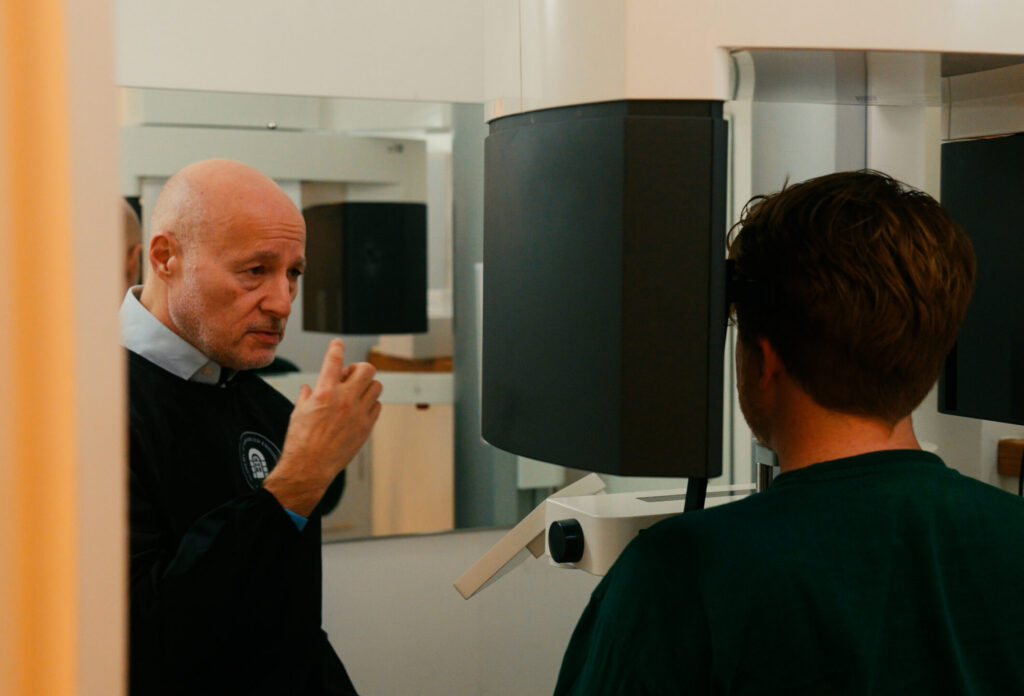
At Endo Academy, diagnosis begins with a detailed clinical examination and a combination of specialist tests, including:
- Pulp sensibility testing to assess how the nerve responds
- Percussion and bite testing to check for inflammation around the root
- Digital X-rays to look for changes in the surrounding bone
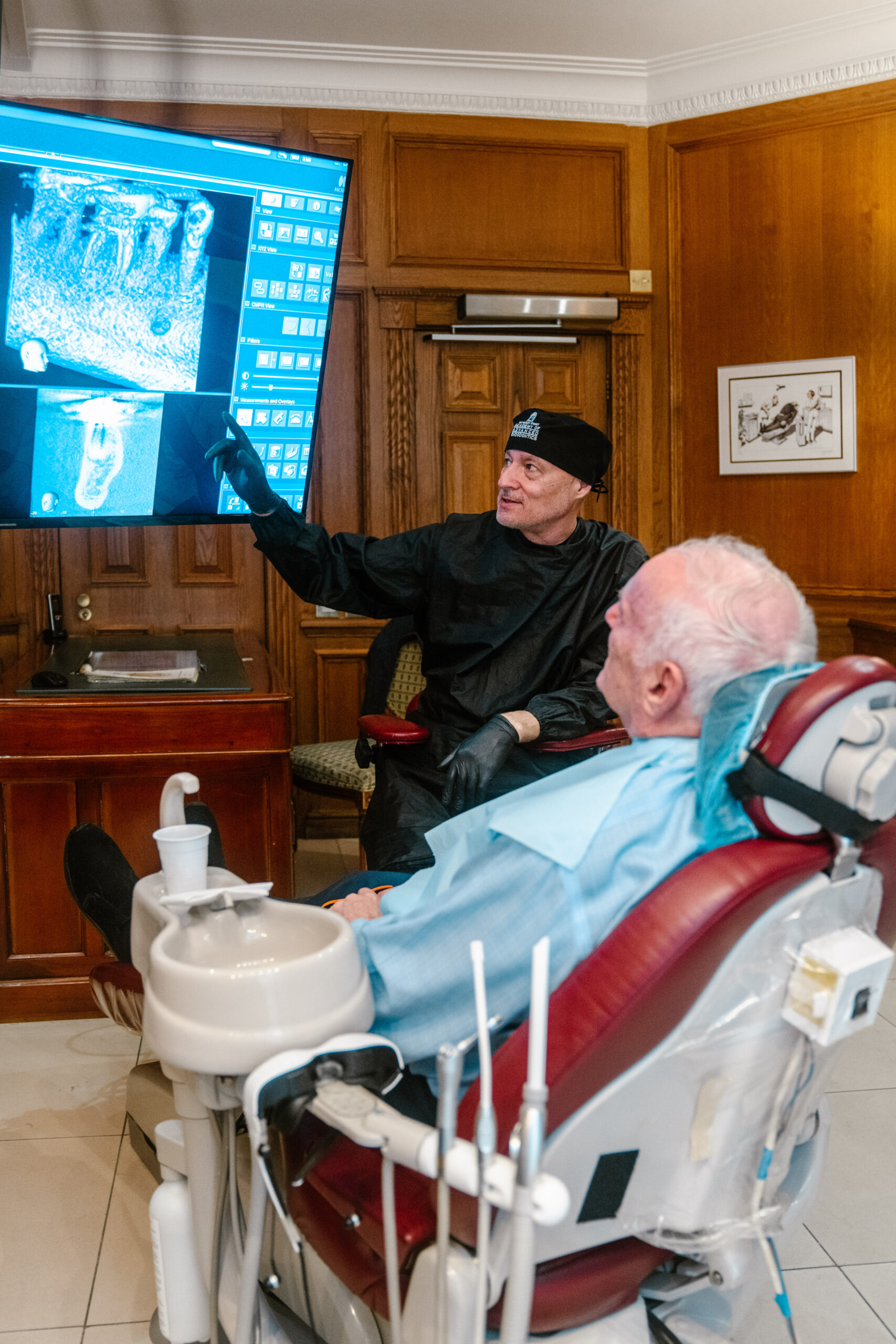
- CBCT 3D imaging, where indicated, to investigate infection or complex anatomy in greater detail
No single test tells the whole story. By combining your symptoms, clinical findings, and imaging, we can establish whether the pulp is necrotic and determine the most appropriate treatment.
How We Treat Pulp Necrosis at Endo Academy
Once the pulp has fully died, it cannot be restored. Treatment therefore focuses on removing the necrotic tissue and bacteria, thoroughly disinfecting the root canal system, and sealing the tooth to prevent reinfection.
There are times when the inflammation has not yet moved to pulp necrosis, or the necrosis is limited to just the pulp chamber. In those cases we may consider a technique known as a pulpotomy in which just the inflamed Orr necrotic tissue can be removed and the live pulp tissue maintained. (See Pulpotomy- link).
At the Academy, we use a specialist-led approach designed to preserve as much healthy tooth structure as possible.
1
Microscope-led root canal treatment
Using high magnification, we carefully locate and clean the root canals, including complex anatomy that can be difficult to see with the naked eye.
2
Advanced irrigation and laser-assisted disinfection
Files alone cannot reach every part of a root canal system. We use advanced irrigation protocols and laser-assisted disinfection to target bacteria in areas conventional instruments cannot access.
3
Sealing the root canal system
Once thoroughly disinfected, the canals are filled and sealed to prevent bacteria from re-entering and give the surrounding tissues the opportunity to heal.
4
Restoration and follow-up
After treatment, we coordinate with your general dentist regarding the final restoration, usually a crown or onlay, to protect the tooth long term. Follow-up allows us to monitor healing and make sure everything is progressing as expected.
Can a Tooth with Pulp Necrosis Be Saved?
In many cases, yes. A dead pulp does not mean a dead end for the tooth.
Once the infected or necrotic tissue has been removed and the root canal system thoroughly disinfected and sealed, the tooth can continue to function normally without a living pulp.
The long-term prognosis depends on several factors, including:
- How much healthy tooth structure remains
- Whether the tooth is cracked or fractured
- The extent of any infection or bone loss
- The complexity of the root canal anatomy
- How well the tooth can be restored after treatment
At Endo Academy, preserving your natural tooth is always the priority. We assess each case carefully to determine whether root canal treatment offers a predictable long-term solution- and if it does, we’ll do everything we can to save it.

Why Choose Endo Academy on Harley Street
- Specialist endodontists with academic and teaching backgrounds
- Microscope-led care for every case, routine or complex
- CBCT 3D imaging when indicated for precise diagnosis and planning
- Laser-assisted disinfection to target bacteria beyond instruments
- Fixed, transparent fees and written treatment reports
- Calm, patient-first experience: we pace, explain, and check comfort
- Harley Street location with reliable appointment availability
Costs & Payment Options
Our fees are fixed, transparent, and confirmed before treatment begins, so you know exactly what to expect. We also offer payment plans when requested.
Your treatment fee typically includes:
- Specialist assessment and diagnostic testing
- Targeted imaging, including CBCT 3D scans where indicated
- Microscope-led treatment with rubber dam isolation
- Advanced irrigation and laser-assisted disinfection
- Root canal filling and a high-quality temporary or permanent core restoration
- A detailed written report for you and your dentist
What’s not included?
The final restoration, usually a crown or onlay, is completed by your general dentist once the tooth has settled. We coordinate closely with them to ensure your tooth is properly protected after treatment.
Retreatment & complex cases
If pulp necrosis is associated with complex anatomy, significant infection, previous root canal treatment, calcified canals, or other complications, treatment may require additional time. Any additional costs will be clearly explained before treatment begins.
NHS vs private care
Access to specialist endodontic treatment on the NHS is limited, particularly for molars and complex cases. Private specialist care provides faster access to advanced diagnostics, modern treatment techniques, and continuity of care with an endodontist.
Our location
99 Harley Street
Strategically located at the heart of London’s renowned medical district, the Academy of Advanced Endodontics enjoys its position on prestigious Harley Street, ensuring easy accessibility and a prime setting for patients and practitioners alike.
FAQs
Answering our most commonly asked questions.
What is pulp necrosis?
Pulp necrosis occurs when the dental pulp — the nerves, blood vessels, and soft tissue inside a tooth — dies. It is commonly caused by deep decay, infection, trauma, or long-standing inflammation and often requires root canal treatment.
What are the symptoms of pulp necrosis?
Symptoms can include toothache, pain when biting, swelling, gum tenderness, tooth discolouration, or a bad taste in the mouth. However, a tooth with pulp necrosis may cause no pain or symptoms at all.
How do I know if the nerve in my tooth is dead?
A dead tooth may become darker, stop responding to hot or cold, or become tender when biting. Sometimes there are no obvious symptoms. Dental examination, pulp testing, and X-rays are needed to confirm whether the pulp has died.
Does a dead tooth always hurt?
No. A tooth may be very painful while the pulp is becoming inflamed, then stop hurting once the nerve dies. The disappearance of pain does not necessarily mean the problem has resolved.
Why has my tooth suddenly stopped hurting?
If you have had significant toothache that suddenly disappears, one possible explanation is that the nerve inside the tooth has died. The tooth should still be assessed, as infection can continue developing without pain.
Can a dead tooth come back to life?
Once the pulp is completely necrotic, it cannot regenerate or come back to life (although experimental regenerative techniques can be attempted in some cases). However, the tooth itself can often be preserved with root canal treatment and continue functioning normally.
What causes the nerve in a tooth to die?
Common causes include deep tooth decay, cracks, dental trauma, leaking or large fillings, repeated dental procedures, and severe or prolonged inflammation of the pulp.
Why does a dead tooth turn grey or dark?
When the pulp dies, changes within the tooth can cause the crown to become grey, brown, or darker than the surrounding teeth. Discolouration can be particularly noticeable in front teeth following trauma due to a bleed inside the pulp breaking down and releasing iron sulphites from hemoglobin.
Does pulp necrosis always require root canal treatment?
If the pulp is completely necrotic, root canal treatment is commonly required to remove the dead tissue and bacteria, disinfect the root canal system, and seal the tooth against reinfection.
Is root canal treatment for a dead tooth painful?
Modern root canal treatment is carried out under local anaesthetic and should be comfortable. If the tooth was painful or infected beforehand, treatment will address the source of that discomfort.
How much does pulp necrosis treatment cost in London?
The cost depends on the tooth being treated and the complexity of the root canal system. Molars and complex cases generally require more time than front teeth. At Endo Academy, fees are fixed and explained clearly before treatment begins.
What happens if a dead tooth is left untreated?
Bacteria can multiply within the root canal system and spread into the tissues surrounding the root. This can lead to apical periodontitis, bone loss, a tooth abscess, swelling, and eventually loss of the tooth.
Can a dead tooth cause an abscess?
Yes. The poisons released by bacteria inside a necrotic tooth can spread beyond the root and cause an abscess. This may result in severe pain, swelling, tenderness, or a pimple-like swelling on the gum.
Can antibiotics treat pulp necrosis?
Antibiotics cannot remove dead or infected tissue from inside a root canal. They may occasionally be required if an infection is spreading, but definitive dental treatment is still needed to address the source.
Can a tooth with pulp necrosis be saved?
Often, yes. Provided the tooth has enough healthy structure remaining and is not severely fractured, root canal treatment can allow a tooth with a dead pulp to remain functional for many years.
Should I see an endodontist for pulp necrosis?
Complex anatomy, significant infection, previous dental treatment, or uncertainty around diagnosis can make specialist endodontic assessment particularly valuable. An endodontist uses advanced diagnostics, CBCT imaging where indicated, and microscope-led techniques to treat the root canal system as predictably as possible.
Still have a question?
Subscribe to our newsletter
Stay up to date with our latest news and events.
By clicking Sign Up you’re confirming that you agree with our Terms and Conditions.