
How Do I Know If My Root Canal Treatment Has Been Successful?
Advanced endodontic care on Harley Street.

5 Stars
From 220+ Google Reviews
Posted on Google
 Angus Hilleary
Trustindex verifies that the original source of the review is Google.
Extremely professional service. I was kept informed at every step and the procedure was swift and painless. Many thanks.Posted on Google Ozlem ThompsonDr. Kahan is an exceptional professional with a great sense of humor. He combines expertise with a warm and approachable manner, making every visit a positive experience. His professionalism and knowledge are outstanding, and he genuinely cares about his patients. Highly recommended!Posted on Google
 Gus GazzardClear, comprehensive, balanced explanation that put my son at his ease despite a difficult clinical situationPosted on Google
 Joe SoaresI found Richard Kahan very easy going, consultative and very focused on my needs also he was very structured on detailed explanations. Thoroughly knowledgeable and helpful.Posted on Google
 Ivana KKind, friendly and skilled staff, would highly recommend.Posted on Google
 Ian BeiderI was booked in very promptly (same day, in fact immediately) after I contacted the practice explaining that I was in severe pain. I was brought back the next day in the dentist's and nurse's lunch hour to relieve my situation. Very impressive and very much appreciated. I also received follow up communication after the appointment to enquire how I was. Overall all staff at the practice were very caring.Posted on Google
 Rachel SchreiberAmazing Service, Amazing Staff, Very HelpfulPosted on Google
 Meilech NeumannAmazing!
Root Canal Treatment
in London (Harley Street)
A tooth that no longer hurts isn’t necessarily a tooth that has healed. Root canal treatment is successful when the infection has been removed and the bone around the root has recovered, and that can take months.
At Endo Academy, our specialist endodontists assess healing with clinical examinations, digital X-rays and, where indicated, CBCT 3D imaging, so you know whether your treatment has worked and what to do if it hasn’t.

Specialist Endodontists

CBCT-Guided
Care

Fixed Transparent Fees
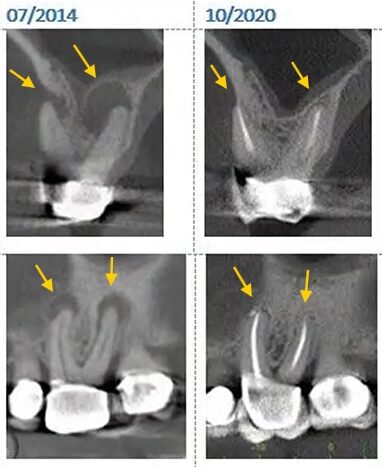
These images show healing of large abscesses around the tips of the three roots of an upper molar over 6 years. The holes in the bone have completely disappeared, with bone regrowth following root canal treatment
What Does a Successful Root Canal Look Like?
A successful root canal does two things: it removes the infection inside the tooth, and it lets the bone and tissues around the root heal. Signs that your tooth is recovering well include:
- No pain: toothache and throbbing have gone, and the tooth is comfortable when you bite and chew.
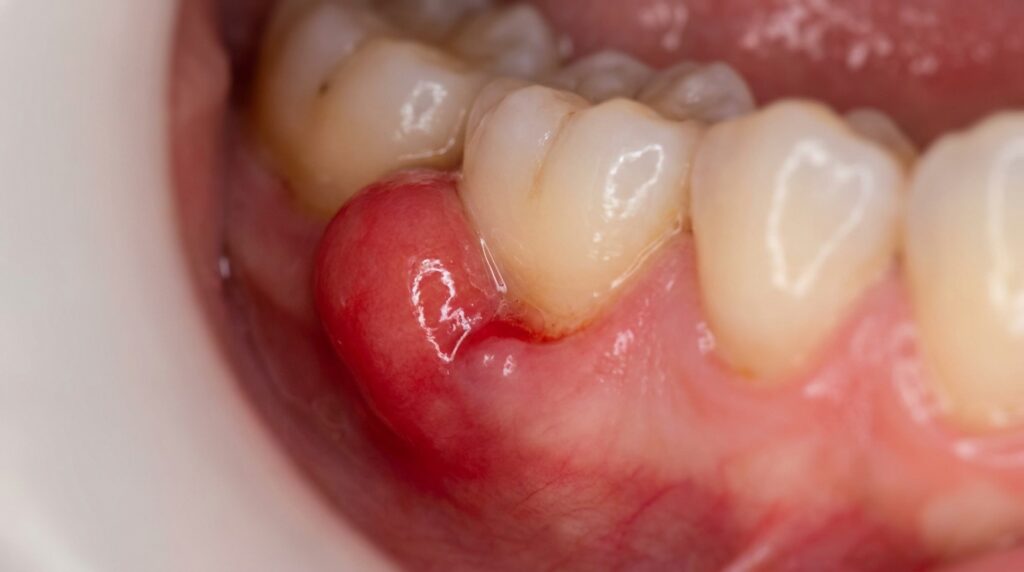
- Healthy gums: there is no swelling, recurring abscess or gum boil near the tooth.
- Normal function: you can use the tooth as you would any other.
- Healing on imaging: follow-up X-rays show the bone around the root tip filling in.
Signs a Root Canal Has Failed
Signs that a root canal may have failed often appear gradually, sometimes months or years after treatment. Look out for:
- Returning pain: toothache that comes back or never fully settles, especially when biting or chewing.
- Swelling: puffiness or tenderness in the gum or face near the treated tooth.
- A gum boil: a small pimple on the gum that comes and goes and may leak pus.
- A bad taste: an unpleasant taste or smell, often from a draining infection.
- A tooth that feels “different”: slightly raised, tender to touch, or not quite like the others.
- Gum changes: darker, redder or more inflamed gum around the tooth.
Can a Root Canal Fail Without Causing Pain?
Yes. Bacteria can survive in the root canal system, even after successful root canal treatment. Unfortunately these bacteria can start to regrow if the filling in the top of the tooth or the root filling starts to leak- called microleakage. The fluids can allow the bacteria to regrow and cause a slow infection at the root tip that produces no symptoms. The tooth can feel completely normal while bone is being lost around it.
The most common causes are:
- Bacteria left in the canal system, including in canals that were missed
- Microleakage under a filling or crown, or through gaps in the root filling.
- Cracks or fractures in the tooth
- New decay in the treated tooth
This is why a review appointment is worthwhile even when the tooth feels fine.
How We Check Root Canal Success
at Endo Academy
1
Clinical Examination
We check the tooth and gums for tenderness, swelling and signs of infection, and make sure the filling or crown is still sealing the tooth.
2
Digital X-Rays
We compare X-rays taken before and after treatment to see whether the bone around the root is recovering.
3
CBCT 3D Imaging
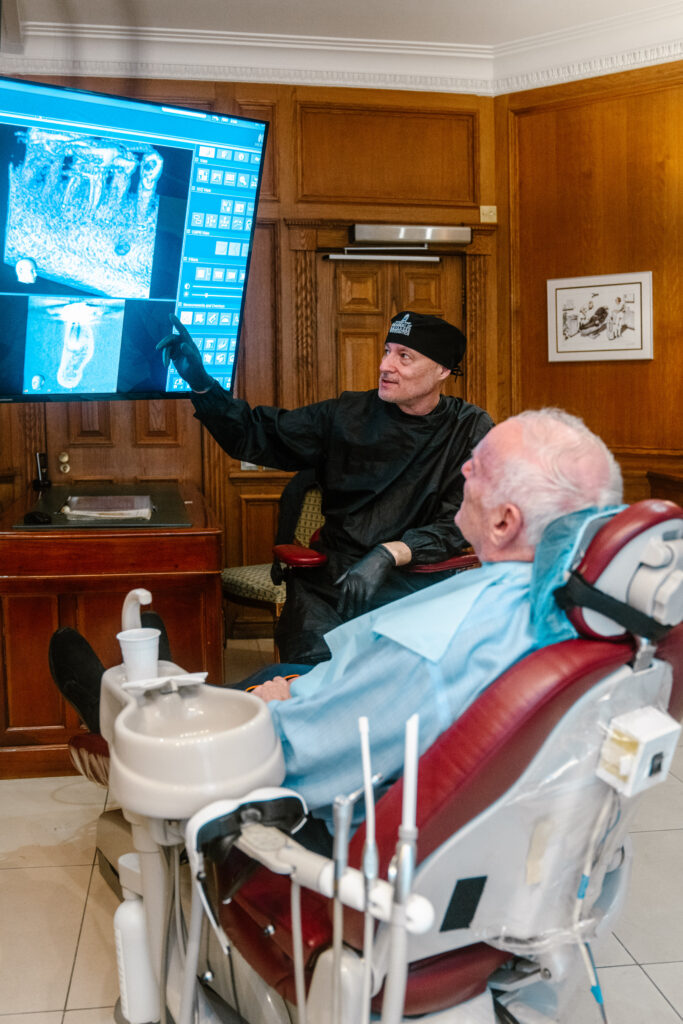
Where clinically indicated, a CBCT scan shows the tooth and surrounding bone in three dimensions. It can reveal infection, bone loss and complex root anatomy that standard X-rays may miss. We use it selectively, weighing clinical need against radiation exposure.
4
Monitoring Over Time
Comparing examinations and images at intervals shows whether a lesion is shrinking and bone is regenerating. Clearer imaging can also prevent unnecessary treatment, by showing that a tooth is healing and only needs watching.
What Happens If Your Root Canal Isn't Healing?
A root canal that isn’t healing can often still be saved. We first find out why healing has stalled, then recommend one of these options:
- Continued monitoring: if the tooth is comfortable and imaging shows some progress, we review it again before deciding on treatment.
- Root canal retreatment: we remove the old root filling, clean and disinfect the canals, including any that were missed, and seal the tooth again.
- Apicectomy (endodontic microsurgery): a minor procedure to remove infected tissue at the root tip and seal the end of the root, used when retreatment isn’t suitable.
- Extraction: considered when the tooth is badly fractured or can’t be predictably restored.
We recommend further treatment only when it is clinically justified, and we always aim to keep your natural tooth.

Why Choose Endo Academy
for Root Canal Follow-Up?
Specialist
Endodontists
experienced in diagnosing and managing complex root canal cases.
Advanced CBCT
3D Imaging
used where indicated to find problems that standard X-rays can miss.
Conservative
Approach
we recommend further treatment only when it is needed.

Clear
Communication
plain explanations of your results and options, with written reports for your referring dentist.

Harley Street
Location:
specialist endodontic care in central London.
Our location
99 Harley Street
Strategically located at the heart of London’s renowned medical district, the Academy of Advanced Endodontics enjoys its position on prestigious Harley Street, ensuring easy accessibility and a prime setting for patients and practitioners alike.
FAQs
Root Canal Success
How do I know if my root canal was a success?
The best signs are that the tooth is comfortable to bite on, the gums around it are healthy, and there is no swelling or recurring abscess. Feeling better isn’t proof of healing on its own, though, because infection around the root tip can persist without symptoms. A follow-up X-ray, and a CBCT scan where needed, shows whether the bone around the root is recovering. When the tooth is symptom-free and imaging shows normal or healing bone, the treatment can be considered successful.
What are the signs of a failed root canal?
Common signs include toothache that returns or never fully settles, pain when biting, swelling, tenderness in the gum near the root tip, and a small pimple or gum boil that may drain pus. Some patients notice a bad taste, or that the tooth feels different from the others. A failed root canal can also cause no symptoms at all and only show up on an X-ray, which is why review appointments matter.
How long does it take for a root canal to heal completely?
Tenderness usually settles within a few days, and the tooth should feel normal within a few weeks. Bone healing is slower. Early signs often appear on X-rays at three to six months, and many teeth show clear improvement by twelve months. Large infections can take longer. Specialist guidelines recommend a review about a year after treatment, with further checks for up to four years if healing is incomplete.
How much does it cost to check if a root canal has failed in London?
The cost depends on what the assessment involves: a specialist consultation, a clinical examination, digital X-rays and, in some cases, a CBCT scan. At Endo Academy, we explain our fees before your assessment, so you know what to expect before any imaging is taken.
Can a root canal fail after 5 or 10 years?
Yes. A root canal that worked well for years can fail later, usually because existing bacteria have found a way to regrow. The most common reasons are new decay, a crown, filling or root filling that has started to leak, or a crack in the tooth. Regular check-ups and prompt replacement of a failing restoration help protect the tooth, and many teeth that fail late can still be saved with retreatment.
Is it normal for a root canal tooth to hurt months later?
No. Mild tenderness in the first days or weeks is normal, but pain that persists or returns months later should be checked. It can be caused by ongoing infection, a missed canal, a cracked tooth or a high bite, and sometimes by a problem in a neighbouring tooth. A specialist assessment with imaging can find the cause.
Can a root canal infection go away on its own?
Generally not. Antibiotics can calm a flare-up, and symptoms may come and go, but antibiotics don’t reach bacteria inside the root canal system. Without treatment, the infection usually persists and can continue to damage the bone around the root. Retreatment or surgery is usually needed to remove it.
How much does it cost to fix a failed root canal in the UK?
It depends on the treatment needed and how complex the tooth is. Retreatment involves removing the old root filling, and sometimes a post or crown, so it usually takes longer than first-time treatment. An apicectomy is priced separately. After assessing the tooth, your endodontist will give you a treatment plan with a fee estimate before any work begins.
Can a failed root canal be fixed without removing the tooth?
Often, yes. Most failed root canals can be treated with root canal retreatment, which cleans and reseals the canals. Where retreatment isn’t possible, for example because a post can’t be removed safely, an apicectomy treats the infection from the root tip. Extraction is usually only advised when the tooth is fractured or too damaged to restore.
How many times can a root canal be redone?
There’s no fixed limit. What matters is whether the cause of failure can be found and corrected, and whether enough healthy tooth structure remains. Each retreatment removes a little more tooth, so the outlook depends on the individual case. An endodontist can tell you whether another attempt is likely to work or whether another option makes more sense.
What does a failed root canal look like on an X-ray?
A failed root canal may show a dark area around the root tip, which indicates bone loss from infection. But a dark area can also be a lesion that is still healing, so a single image isn’t enough. Comparing X-rays taken over time shows whether the area is shrinking, staying the same or growing. CBCT can show lesions that are hidden on standard X-rays.
Do I need a CBCT scan after root canal treatment?
Not usually. Standard digital X-rays are enough for most routine reviews. They can be difficult to compare though as the X-rays have to be taken at the same horizontal and vertical angulation. A CBCT scan may be recommended if symptoms persist, X-rays are unclear, a crack or missed canal is suspected, or surgery is being planned. We only recommend one when the extra detail is likely to change the diagnosis or treatment.
How much does a CBCT scan cost for root canal treatment?
CBCT fees vary with the size of the area scanned and whether the scan is part of a specialist consultation. At Endo Academy, we’ll explain any imaging costs before the scan is taken.
Is it better to redo a root canal or extract the tooth?
If the tooth can be predictably treated and restored, keeping it is usually the better option. A natural tooth is biologically active, even when root treated. It gives feedback when bitten on and keeps its own bone and gum support maintaining the natural balance of the mouth. Extraction may be the right choice if the tooth has a vertical root fracture, extensive decay or too little structure left. We’ll explain the long-term outlook for each option so you can decide.
When should I see a root canal specialist after treatment?
Book an assessment if pain continues or returns, swelling develops, an abscess or gum boil appears, or your dentist sees an area on an X-ray that isn’t healing. Even without symptoms, a review about a year after treatment is a good idea, particularly if there was a large infection beforehand.
Still have a question?
Subscribe to our newsletter
Stay up to date with our latest news and events.
By clicking Sign Up you’re confirming that you agree with our Terms and Conditions.